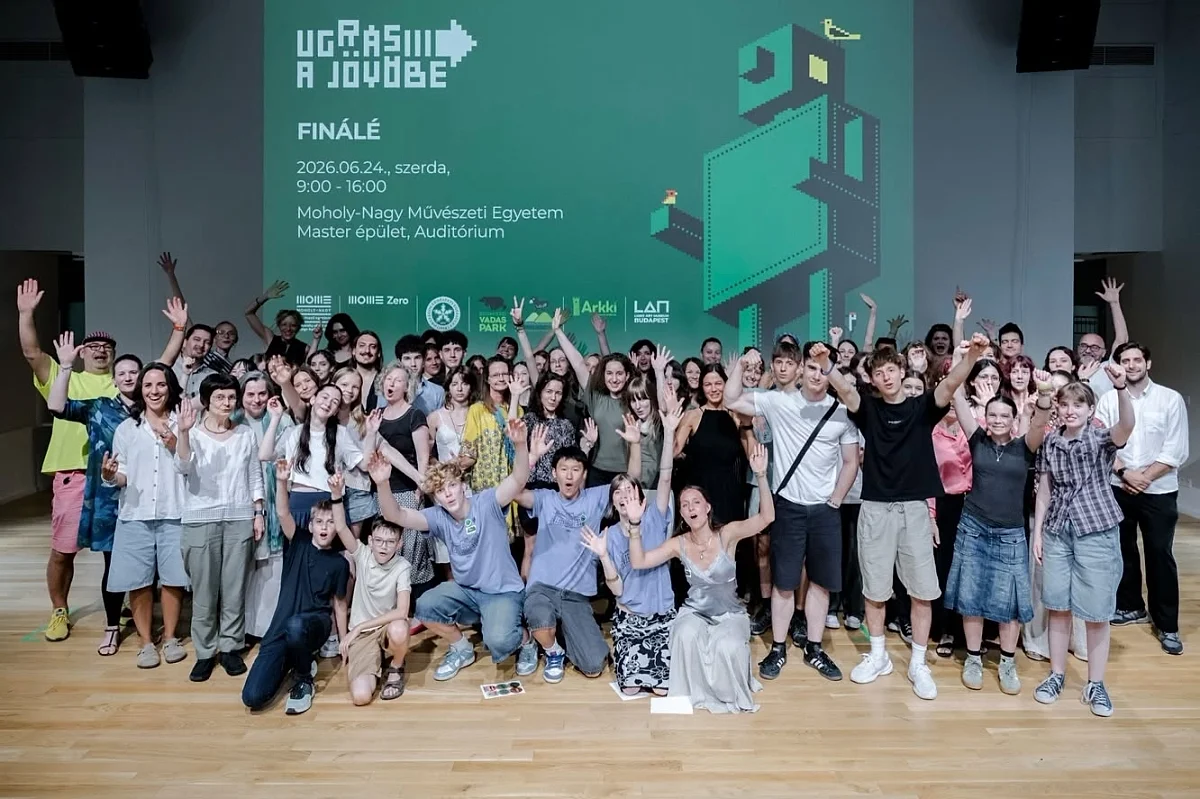
The forest of the future: the final of the Jump into the Future! competition has taken place
Sketch Squad imagined a future city in which nature is not pushed out of the built environment, but becomes an integral part of it. Their concept brings together roof gardens, solar panels, energy-generating surfaces, elevated pedestrian routes, and spaces freed from car traffic. This urban world is seen through the eyes of a stray cat, giving the technological and environmental ideas a distinctive narrative perspective. The team also received the Complex and Systems Thinking Award.
The runners-up, dECO, presented a vision of a living eco-technological system based on mangrove trees. Their dome-like structure would make use of the heat and airflows generated by AI data centres while using mangroves to recirculate water, filter gases, produce oxygen, and create its own microclimate. Addressing overheating, water scarcity and the growing energy demands of the built environment, the project also received the Most Innovative Idea Award.
Erdei Remeték explored the relationship between people and nature by critiquing a future shaped by dependence on technology. Told in diary form, the story follows a family, who after the collapse of urban life built around robots is forced to start over near a forest. Physical labour, cycling, shared family activities, and a reduced reliance on technology gradually give everyday life a different rhythm. Alongside third place, the team also received the Future Generation Award.
One of the key new features of this year’s final was the expanded evaluation system. In previous years, feedback on the projects presented at the final mainly came from the jury. This year, mentors and the students themselves were also involved in the evaluation. Mentors gave feedback on teamwork, collaboration, and the extent of each team’s progress over the weeks of mentoring, while participants reflected on their own work and on how their teams had functioned.
“We felt it was important not to assess only the final outcome,” said Chair of the Jury, design manager and professional lead for MOME Zero’s sustainability activities Éva Tornyánszki. “The jury sees a ten-minute presentation and the exhibited work, but not the weeks, sometimes months, of research, debate, discussion, and experimentation behind them. That is why it is important for the evaluation to make the process visible as well.”
The new three-part evaluation system was based on the idea that the value of a project is revealed not only in the final, but also in the process leading up to it. Self-evaluation gave students the opportunity to measure their work not only against external expectations, but also against their own goals and needs, and to reflect on how they had grown individually and as a team. According to the organisers, this approach helped participants experience the shared work in a more nuanced and positive way, even under the pressure of the final.
The other members of the jury were design educator Judit Bényei; architecture critic and visual environment researcher Krisztina Somogyi; forest engineer and Managing Director of Budakeszi Wildlife Park Péter Szabó; and visual artist and Artistic Director of the Light Art Museum Budapest Szabolcs Vida.
Green Tech Girls received the Special Award for Social Sensitivity, AgraBorius for Personal Responsibility, UrbanNature for Most Endearing Solution, CEF for Forest Ambassador, Future4U for Best Team, Szimbióták for Back to Nature!, and Szenthumusz for Rebranding.
The 2026 edition of Jump into the Future! once again showed that, for young people, the future is not an abstract idea but a shared space they can help shape. It is a space where ecological challenges, technological change, and social responsibility are not separate issues, but interconnected choices.
The programme partners were Light Art Museum Budapest, the National Forestry Association, Budakeszi Wildlife Park, Pilisi Parkerdő Zrt., Arkki Hungary Kft. and MOME Zero.
More news