The future begins at the revamped MOME TechPark
As part of the Practice-oriented Higher Education Infrastructure and Skill Development at MOME project, more than 650 new pieces of equipment, including digital and technological machines, have been added to the university’s TechPark. The project, supported by the European Union under grant RRF-2.1.2-21-2022-00021, was funded with nearly HUF 2.2 billion in non-refundable support.
The aim of this development is to provide MOME’s workshops with a professional environment that prepares students for the challenges facing the creative industry in the 21st century. The primary function of the TechPark is to ensure practical education, making it the main venue for the Bauhaus-inspired, practice-oriented training programmes. This is where students spend the most time during their studies, receiving not only access to state-of-the-art infrastructure but also expert guidance and support. In these fully-equipped workshops, they can master the use of modern technologies, whether it involves car design, digital object creation, animation, or architectural prototype development.
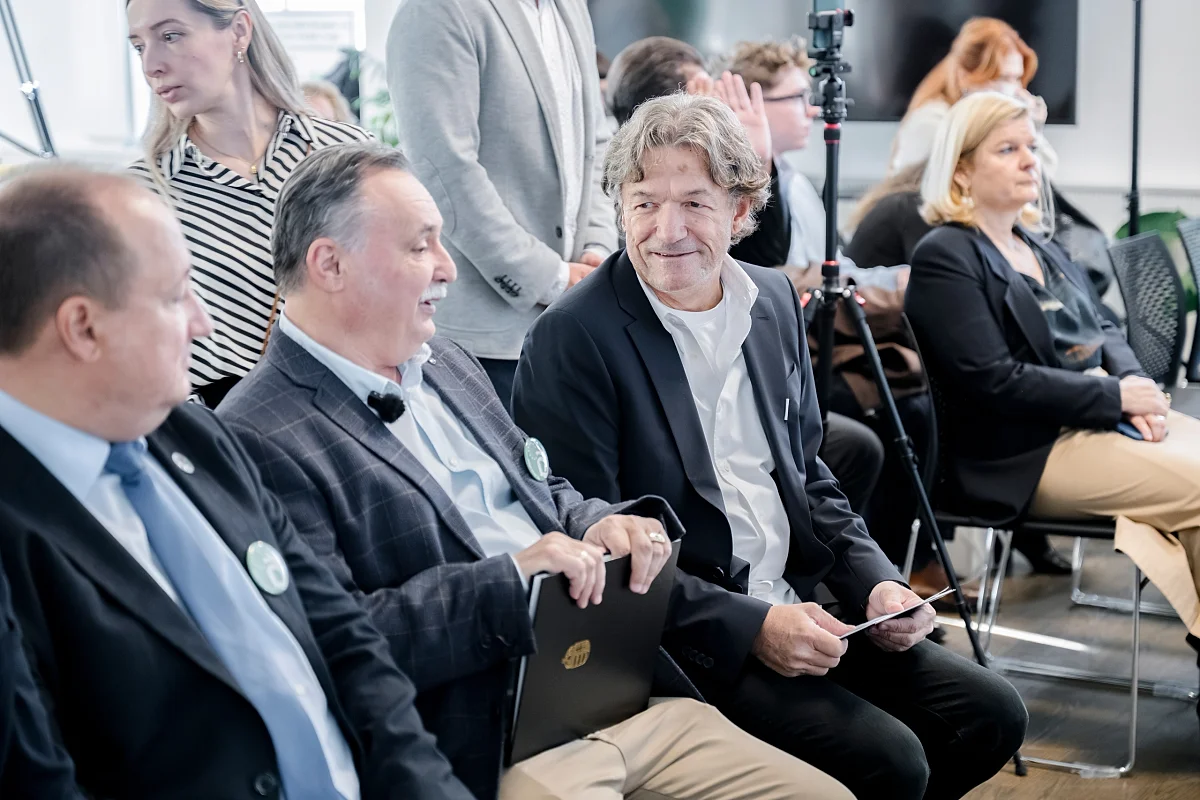
The most exciting part of the associated demonstration event was the TechPark tour, where guests had the chance to see the new film studio equipment, including lights, microphones, and sound recorders, as well as the Digital Object Creation workshop's tools for 2D and 3D modelling and laser cutting. These machines are integral to students’ everyday work, enabling them to model and create advanced prototypes. In addition to the digital tools, the development also modernised traditional workshops, including the analogue photo labs, graphic and printing technology labs, as well as glass and ceramics workshops.
“The newly acquired equipment will significantly contribute to the long-term development of our educational and research activities, enabling the university to become a leading creative industry training and research centre in Central Europe”, said CEO Réka Matheidesz. She added that the university has a responsibility to ensure that its graduates are familiar with the practical applications of the latest technologies and have the knowledge of the tools and machines they will use in their future careers.
TechPark’s interim director Ádám Krasz highlighted during the presentation of the machinery that the new tools are not only interesting in themselves but also within the context of education.
“It’s crucial to understand how a particular technology opens up new possibilities for thinking, for the creative process, and for our students to work with professional creative tools during their university years. The RRF project allows us to further develop and expand practice-oriented education, modernise our equipment, and enhance the quality of student work, while ensuring they gain skills that are highly valued in the job market,” he explained.
Beyond technological expansion, the university has also revamped its digital services. The University Life Platform (ULP), a digital interface to support students, has been launched, providing the latest news, useful information, and updates on everything from legal changes to new scholarship opportunities and sports activities. The platform is available as an app for download from the App Store and Google Play, and can also be accessed via a web interface. MOME has also developed a proprietary e-learning system which offers innovative solutions for mentoring and tracking individual development, with multimedia teaching materials from the Business to Design course being the first to feature on this platform. Plans are underway to introduce a Digital Literacy course on the platform, aimed at promoting digital dialogue between students and educators and establishing a unified level of digital literacy across the university community.
MOME’s vision for the future also includes internationalisation. New English-language MA programmes, English language training for students and staff, and participation in international conferences and trade fairs are all part of the strategy to ensure that Hungarian design and art education remains competitive on the global stage.
The results of this project help position MOME as a knowledge hub that responds to the challenges of the future with technological innovation. Here, students can work with the tools of the future while mastering their craft. This ongoing transformation aligns with MOME’s educational strategy, where analogue and digital, tradition and innovation, and the past and future are all present together.


More news