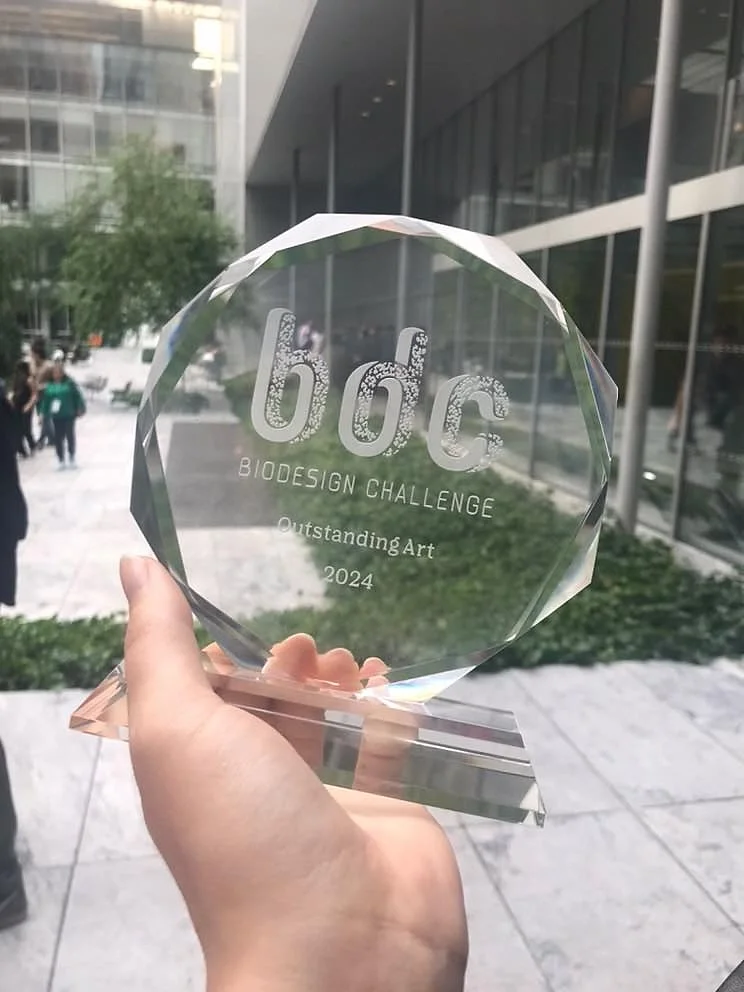
Sustainable drawing tool developed at MOME wins award at the New York Biodesign Challenge

Date: 2024.07.10
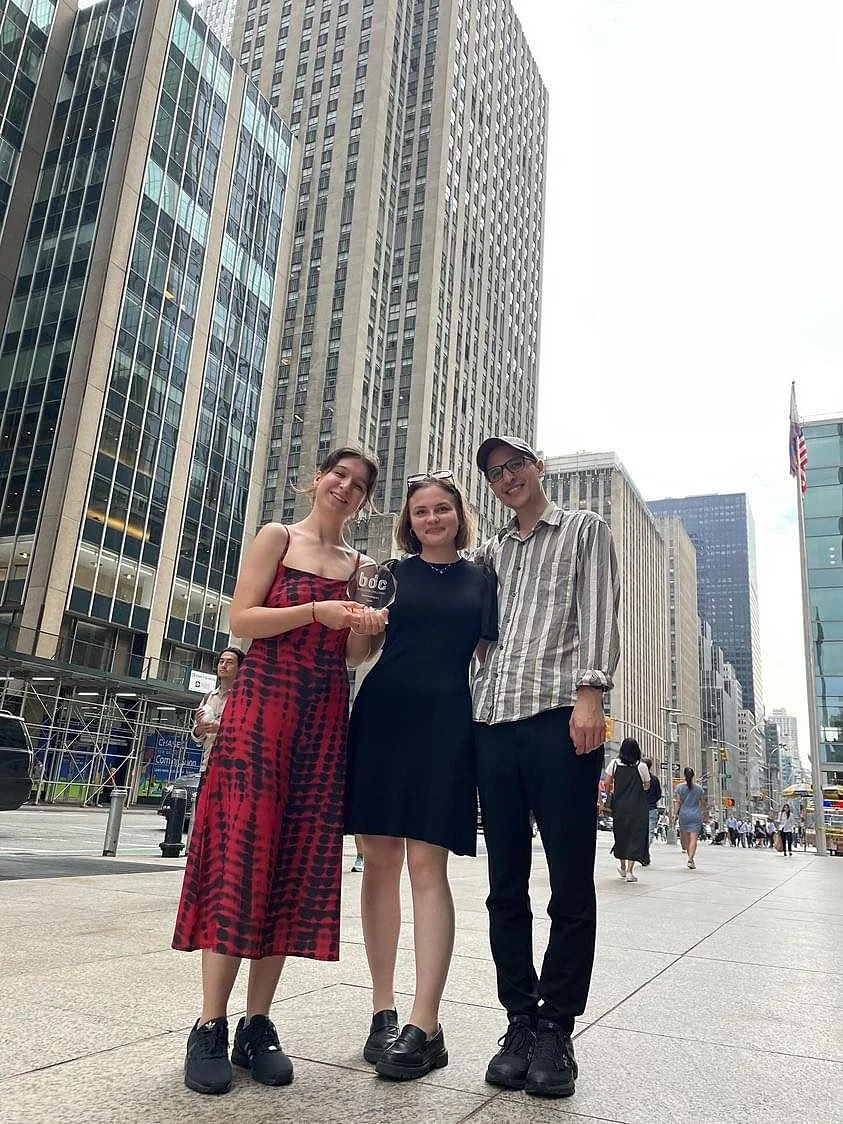
Each year, 10 billion plastic pens are discarded worldwide, contributing to non-biodegradable waste that contains harmful chemicals, which can cause health issues if not processed properly. Despite this, coloured markers are indispensable for both schoolchildren and professionals in the creative industries. The pHen, an eco-friendly pen that won the Outstanding Art Award at the 2024 Biodesign Challenge in New York was developed by a student team from the Moholy-Nagy University of Art and Design (MOME) to address this issue. In addition to this accolade, the pHen team also secured a scholarship and an opportunity for an independent exhibition next year.

The team, consisting of Nóra Gulya, Csongor Boldizsár Nagy, and Szonja Somogyvári, comes from the diverse fields of Textile Design, Media Design, and Graphic Design. They began developing their revolutionary writing implement concept during a course. The tool is eco-friendly, versatile, appealing, promotes sustainable practices, and supports a circular economy with its refillable, multi-colour, non-toxic materials. 


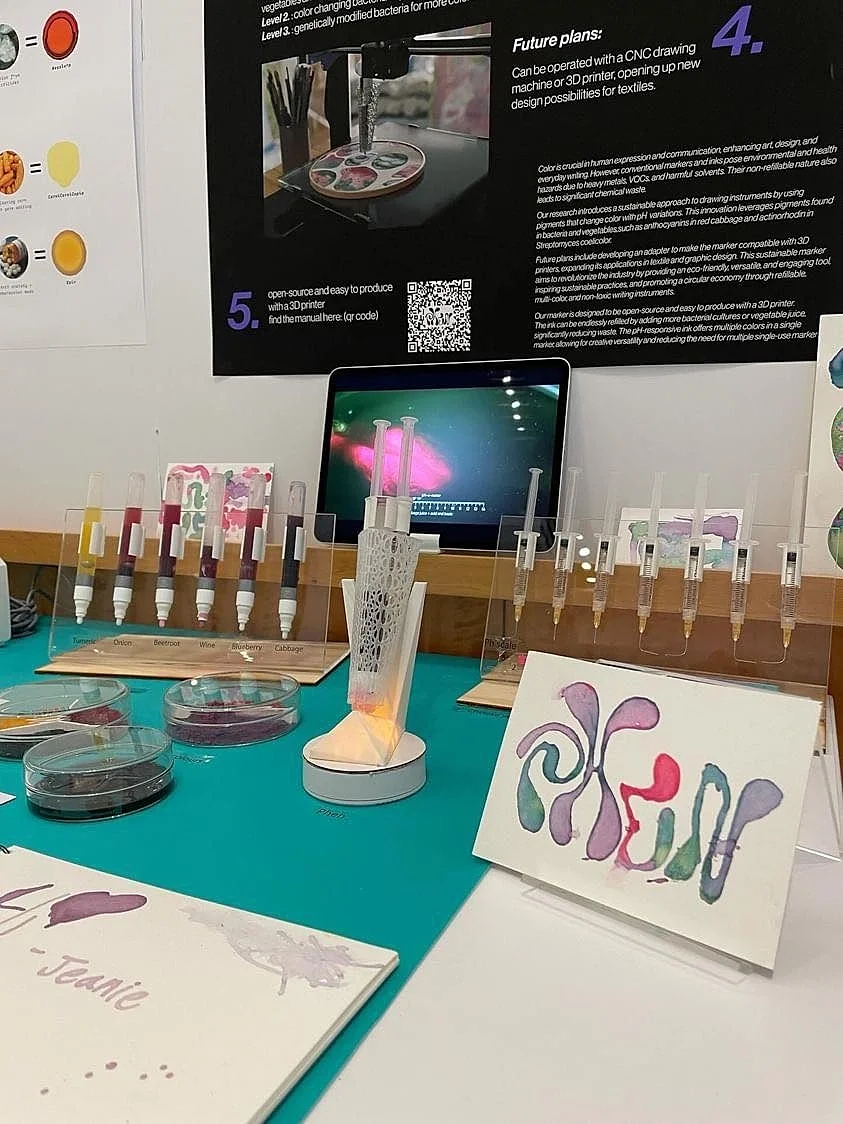
So, how does it work? The pHen pens are innovative, sustainable markers that use pH-sensitive pigments derived from bacteria and vegetables, such as red cabbage. These markers change colour based on pH variations and are refillable, thereby reducing waste and eliminating harmful chemicals. 


The pHen is backed by research on pigments that change colour with changes in pH, using pigments found in bacteria and vegetables such as anthocyanins from red cabbage and actinorhodin from Streptomyces coelicolor to create sustainable inks. Since a single marker incorporates multiple colours, it offers more creative possibilities than traditional markers.The pen casing is designed to be open-source, allowing it to be produced in any fablab worldwide using a 3D printer, saving on shipping costs and making the design accessible to everyone. Their plans also include development of an adapter for 3D printers to support textile and graphic design. 


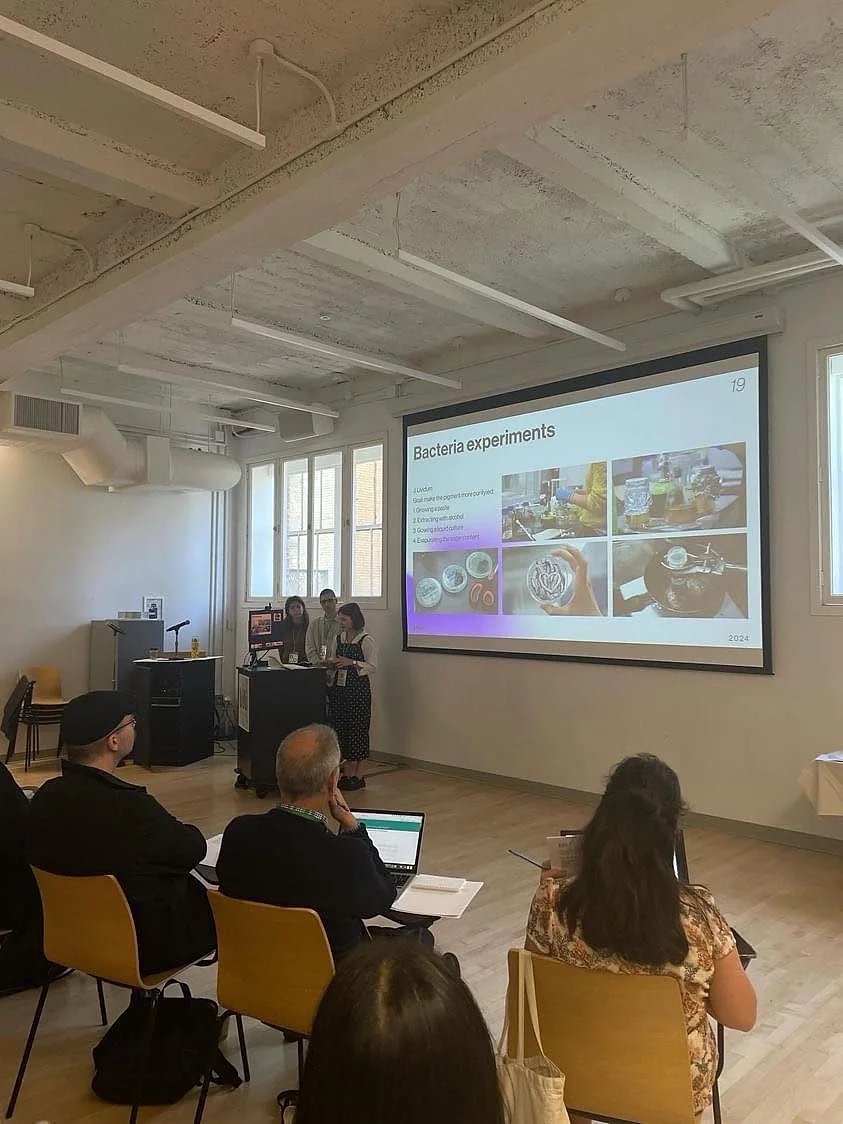
This year marks MOME's first participation in the prestigious Biodesign Challenge, where the team was among the finalists from over 500 students across fifteen countries. From September to spring, participants worked on perfecting their designs over two semesters with their course leaders, acting head of the Materials Research Hub, biodesigner, and material researcher Malu Lücking and workshop leader and art teacher Ferenc Kovács-Nagy. Their projects were then presented in mid-June in the final round in New York. 


The Biodesign Challenge aims to create an international knowledge-sharing platform for biodesigners, foster an active professional community, and promote biodesign technology among professionals. 
More news
A 2026. április 12-i választással egyértelmű és megkérdőjelezhetetlen felhatalmazás született a tudományos szabadság és a felsőoktatási autonómia maradéktalan helyreállítására, valamint a szférának az Európai Kutatási és Felsőoktatási Térségbe való visszatérésére. A MOME Szenátusa ezúton kinyilvánítja, hogy élni kíván a változás lehetőségével, ezért a továbbiakban autonómiájának újjáépítésén fog dolgozni.
A „Helyzet van!” programsorozat nemcsak beszélgetést indít, hanem konkrét válaszokat is keres arra, hogyan lehet biztonságosan és felelősen működni egyetemi közegben. Nem mindig egyértelmű, hogy egy helyzet „belefér-e”, vagy már határsértő. A MOME tavasszal indított kezdeményezése ezekhez kínál kapaszkodókat: hogyan működnek a szabályok a gyakorlatban, és hova lehet fordulni, ha kérdésed van. Folytatjuk dr. Sebestyén Andreával (jogász, tréner, coach) indított beszélgetésünket, ezúttal ezekről a határhelyzetekről.
„Helyzet van!” – mondjuk, amikor érezzük, hogy valami nincs rendben, de nehéz pontosan megfogalmazni, hogy mi zavar bennünket, mit tehetnénk. A MOME szemléletformáló programsorozata épp ezekre a helyzetekre keres közös nyelvet: hogyan lesz egy szabályzatból valódi gyakorlat, és miképpen lehet biztonságosabban működni egy kreatív közösségben. A 2026 márciusában indult eseménysorozat szakmai vezetőjével, egyik szakértőjével, dr. Sebestyén Andreával (jogász, tréner, coach) beszélgettünk a határokról, a felelősségről és a tudatosságról, valamint arról, hogy mi kell a változáshoz.
Member of the European
Network of
Innovative
Higher Education Institutions
9 Zugligeti St,
Budapest, 1121