MOME’s Library reopens as a vibrant intellectual hub and community space
A library for the community
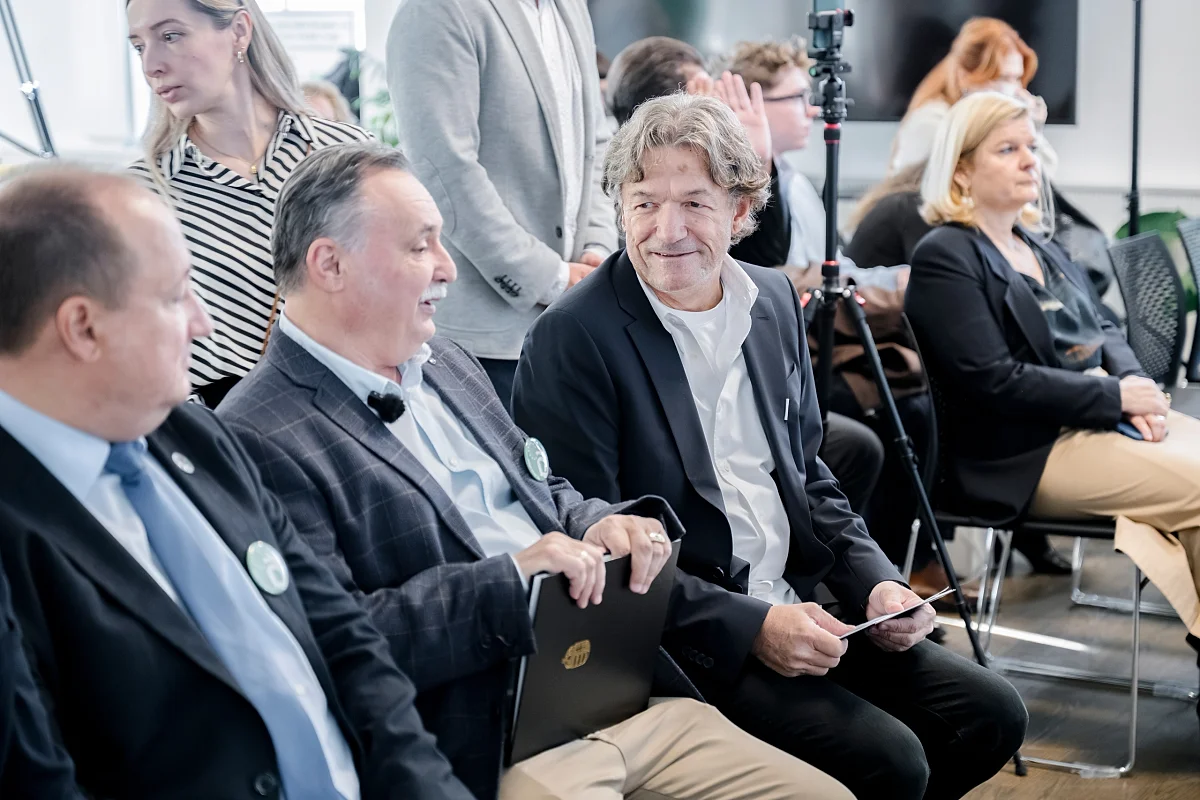
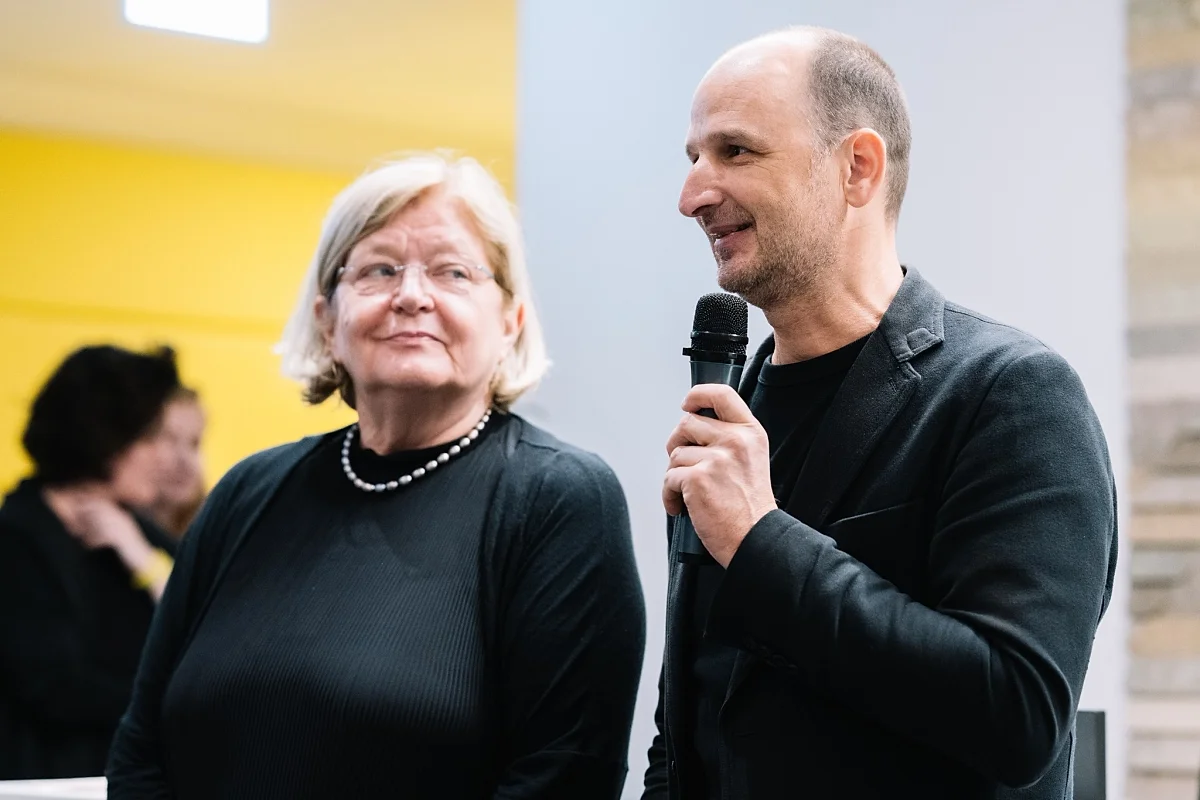
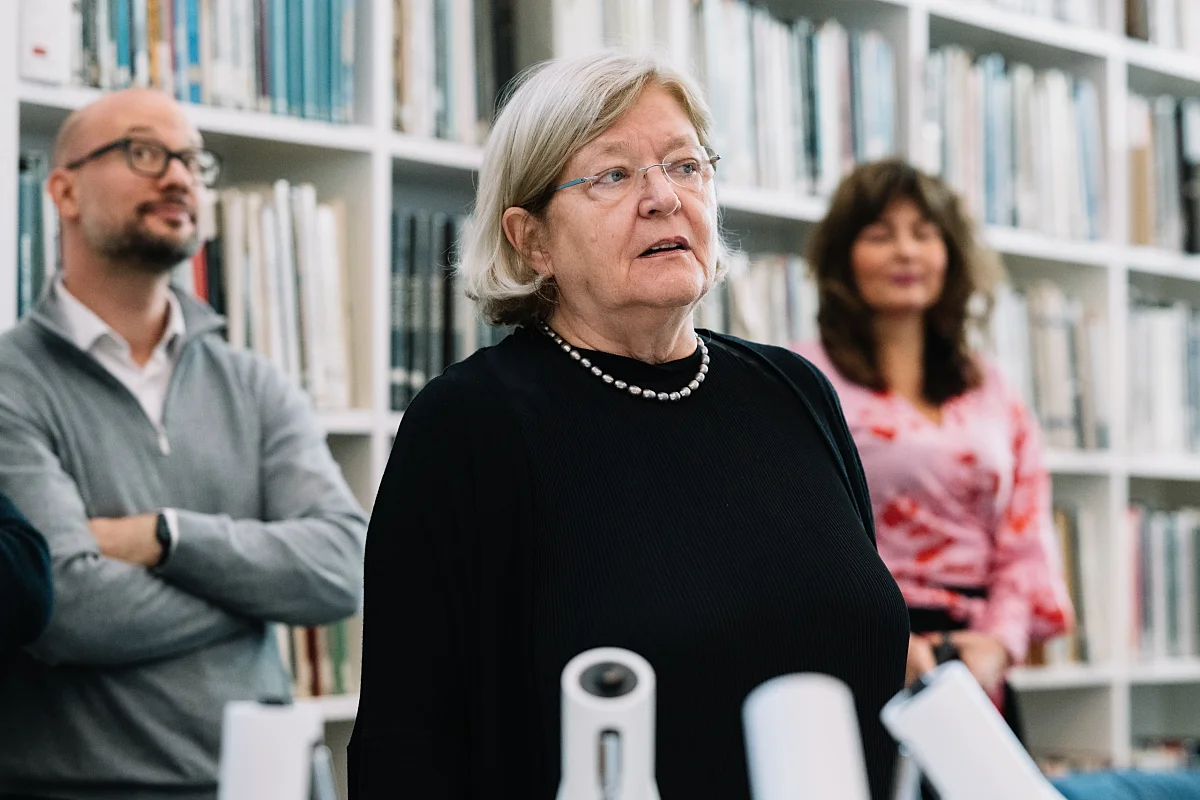
Today, the reopening library carries greater significance than it did decades or even centuries ago. In an age defined by distraction, libraries have become countercultural spaces that safeguard independent thought. As President of the Foundation for Moholy-Nagy University of Art and Design Gergely Böszörményi-Nagy remarked at the opening, “No serious university can exist without a serious library – just as there would be no MOME Library without its devoted director, Head of Library Klára Lévai, who has run it for nearly twenty-four years, putting her heart and soul into its development”.
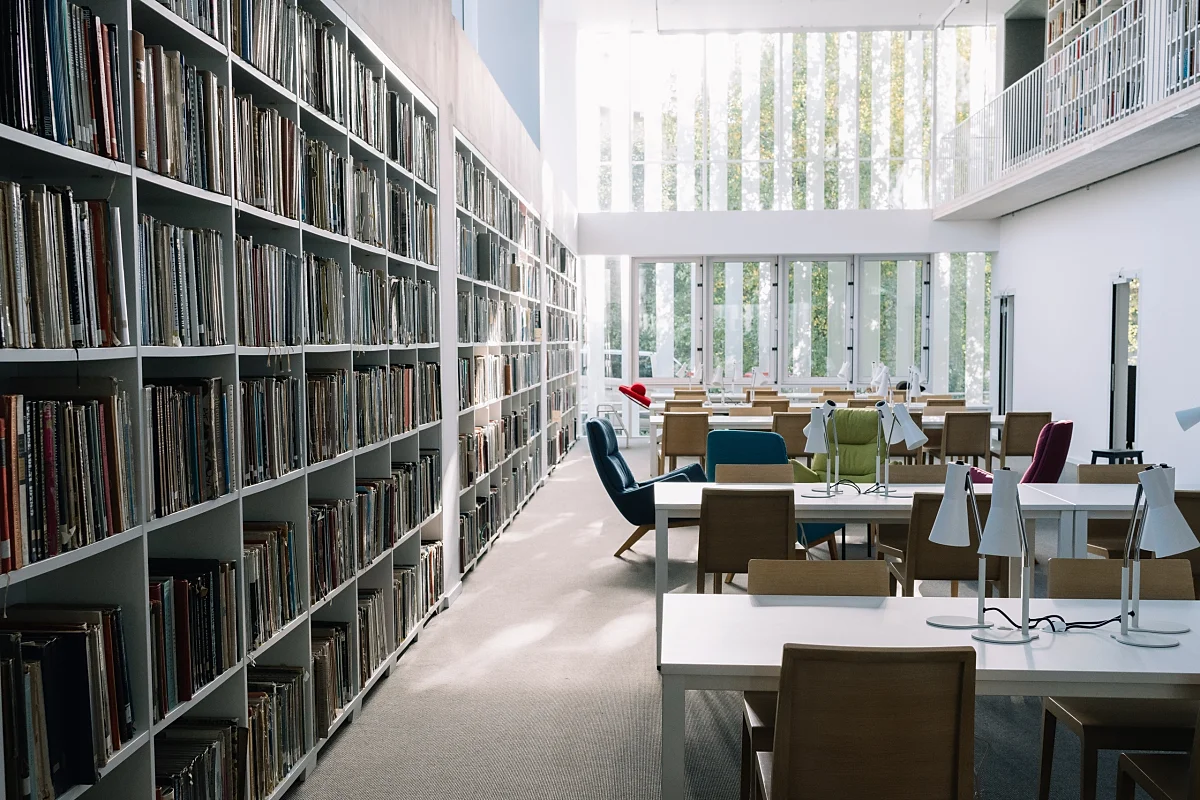
The MOME Library is one of Hungary’s leading art libraries, yet its primary role remains supporting academic work at the university. Its collection currently holds more than 80,000 items, and it subscribes to nearly 200 printed journals. Like a living organism, it continues to grow, most recently through a 7-million-forint book donation by the Foundation’s President at the opening.
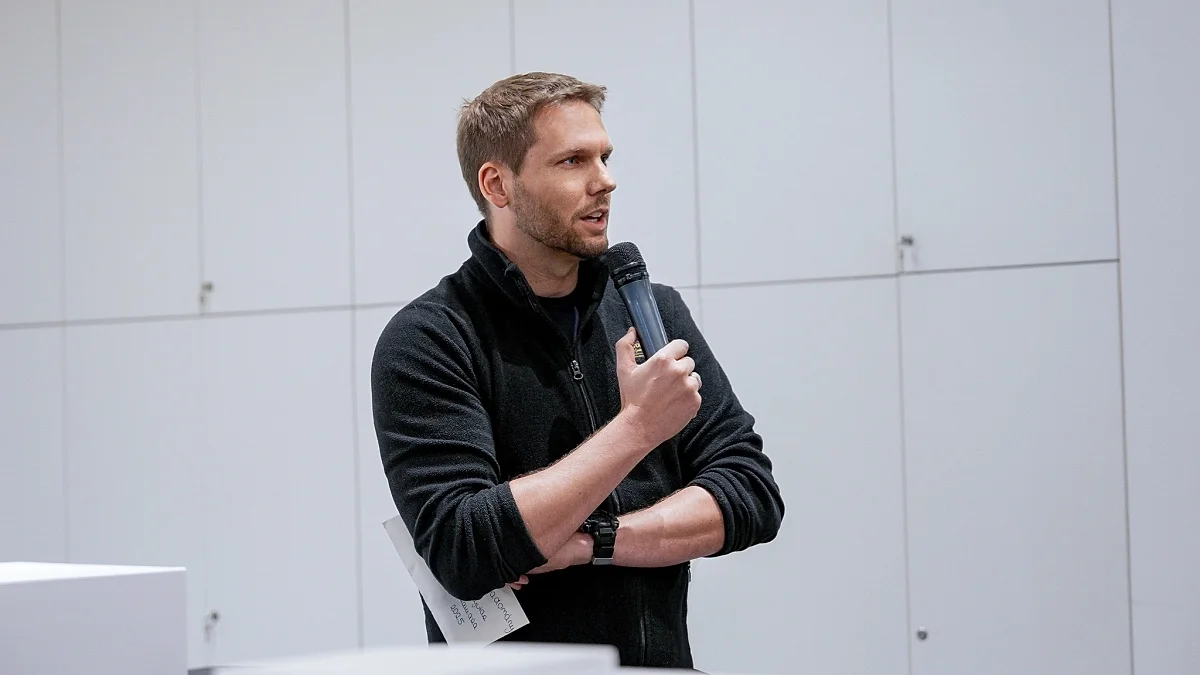
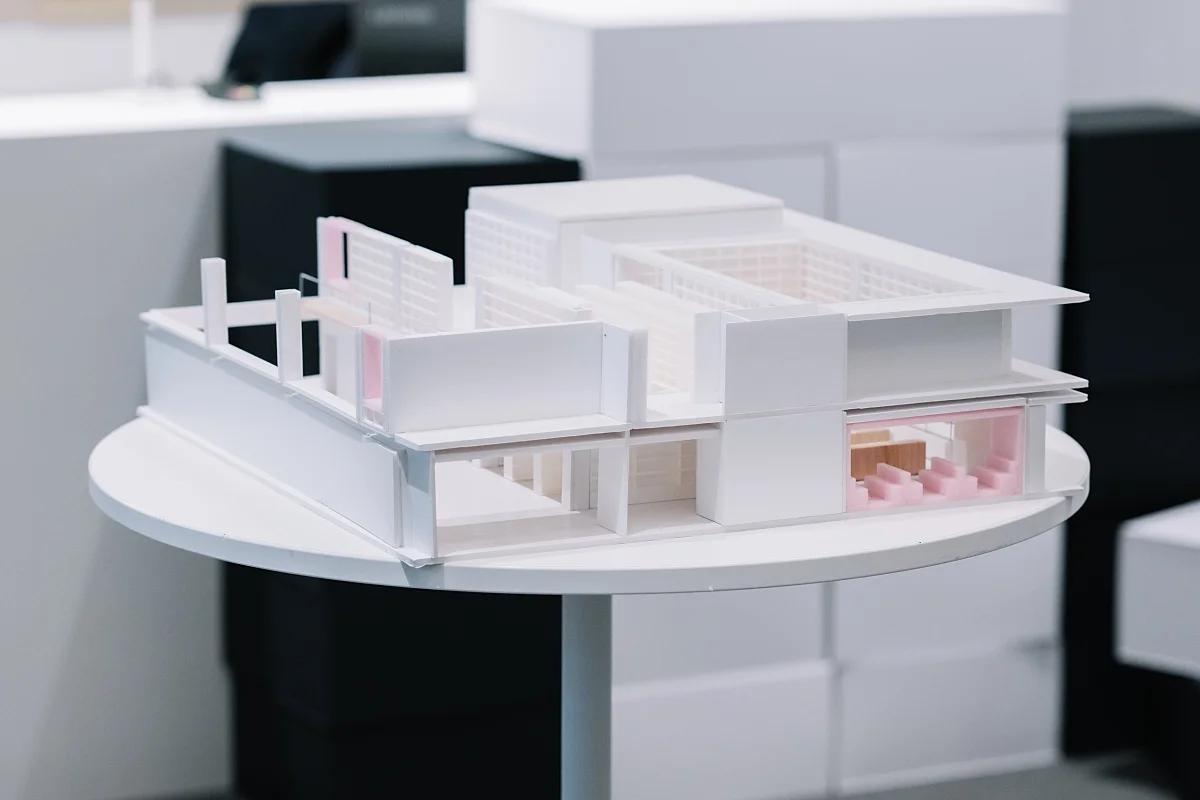
The design was led by Balázs Marián, András Göde, and Péter Gereben, and brought to life through close collaboration across many groups – from the university and campus management to the contractors. Representing the design team, Balázs Marián noted that spaces for teaching and learning are in constant flux, adding that not every transformation has to be structural; sometimes fine-tuning alone can spark meaningful change.
Acting Rector Csaba Kovács underlined that while the university has strong core values, a distinguished history, and a vibrant present, ongoing development remains essential. The library’s renovation, completed after six years, symbolises this approach on a smaller scale – showing that even well-functioning, high-quality spaces can still be refined and improved.
Reorganised through micro-interventions
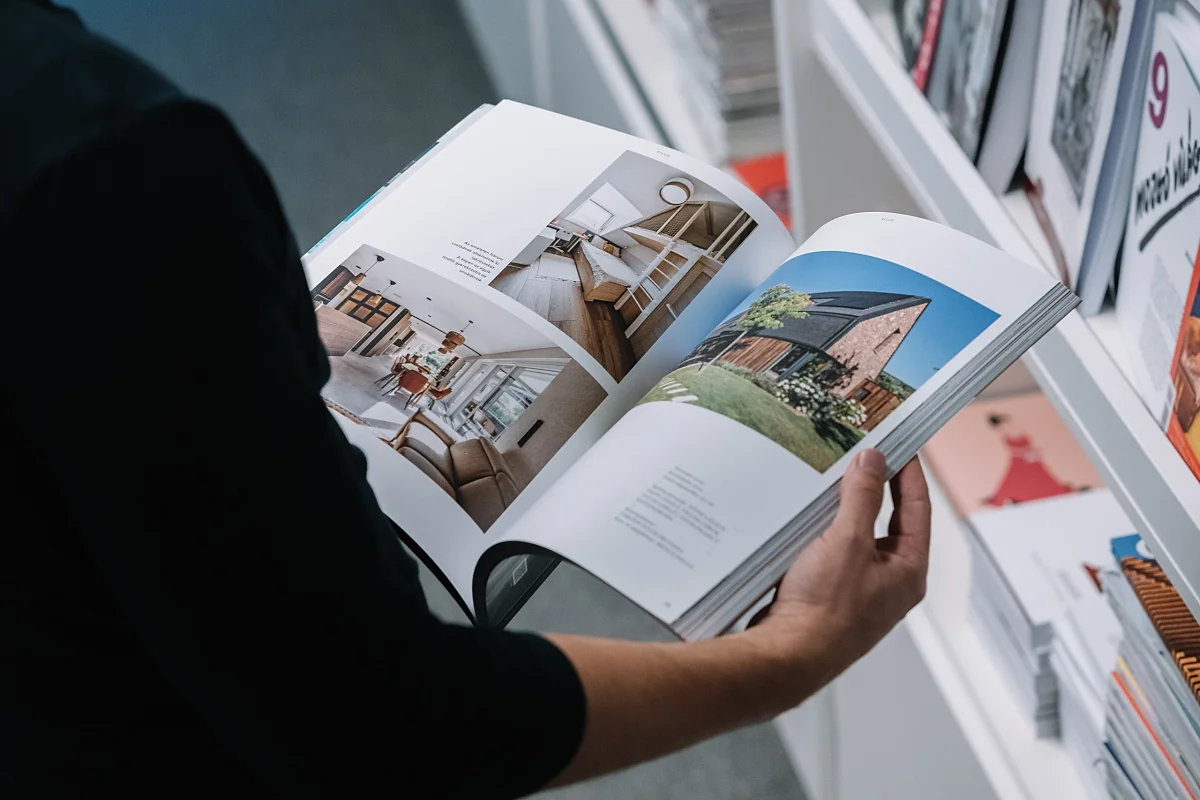
It is common for libraries to display new acquisitions on a dedicated shelf, yet the MOME Library takes a more distinctive approach. New publications are showcased in a bookshop-style display window, turning the surface itself into a functional and visually engaging feature that has become a key element of the library’s visual identity.
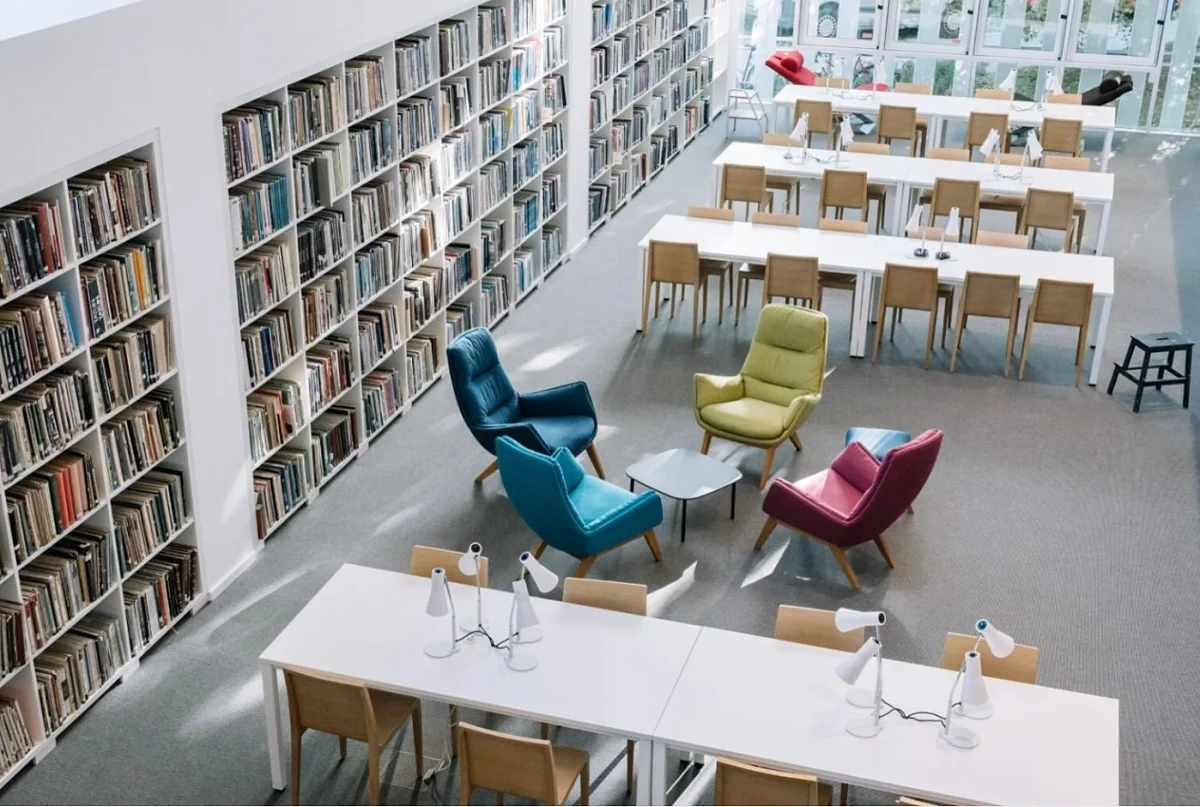
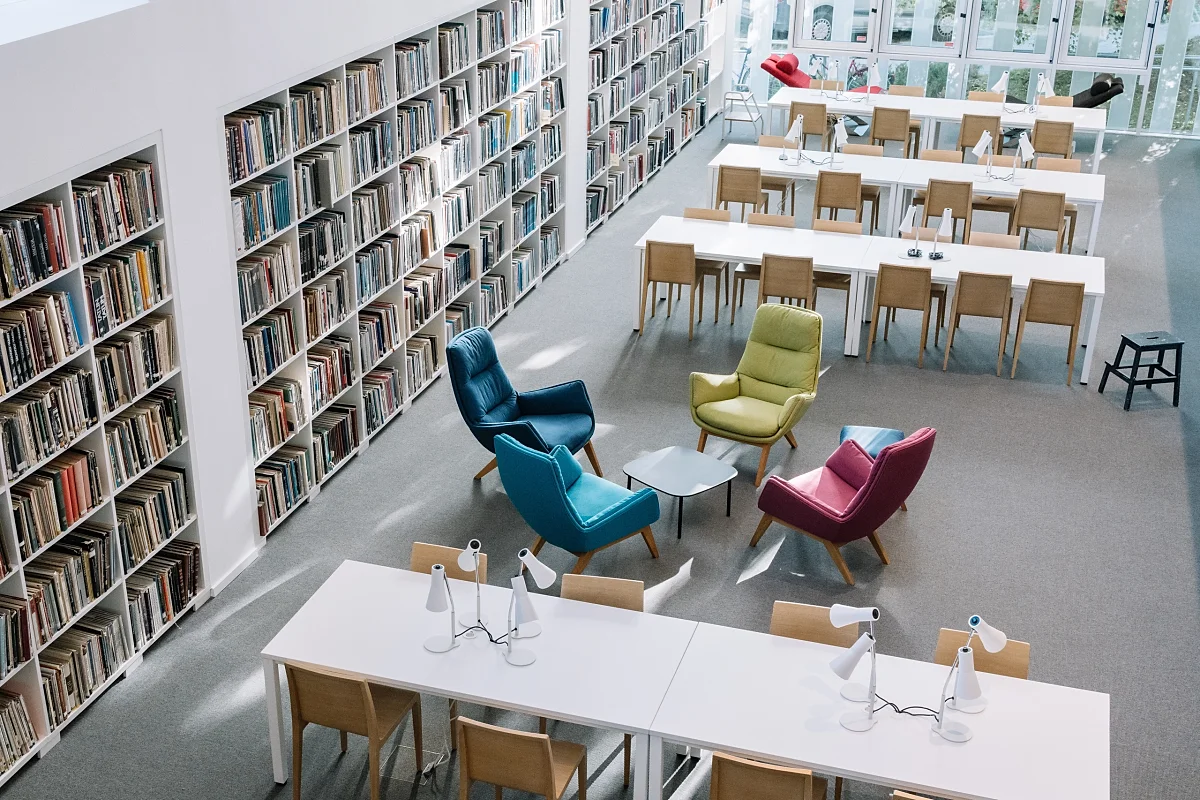
This is just one of fourteen micro-interventions introduced by the designers to address the needs of teaching staff, students, and, of course, the librarians. New power outlets with built-in lighting and charging points have been added to the tables, the periodicals section has been relocated, and new reading nooks now offer comfortable spots for study and research.
The Moholy-Nagy Research Room has been separated by a partition wall, creating a suitable environment for group work and collaborative learning, while a custom-designed communal table will soon be added.
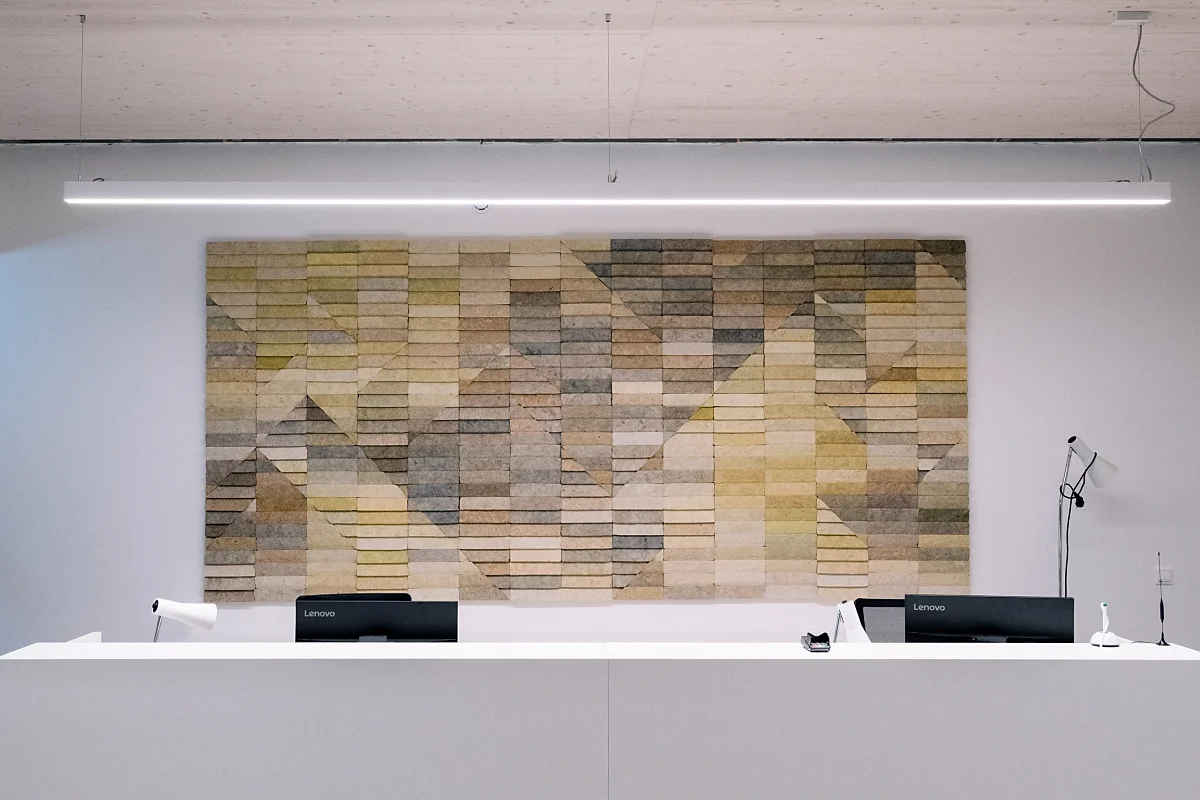
Acoustic challenges were addressed with recycled wool panels designed by textile designer and MOME lecturer-researcher Apol Temesi, whose work combines functionality and aesthetics. The panel above the information desk, for example, was dyed using pigments extracted from goldenrod and Japanese knotweed. The same upcycled panels, made from industrial felt waste, were also used to create quiet zones, this time in natural white and grey tones.
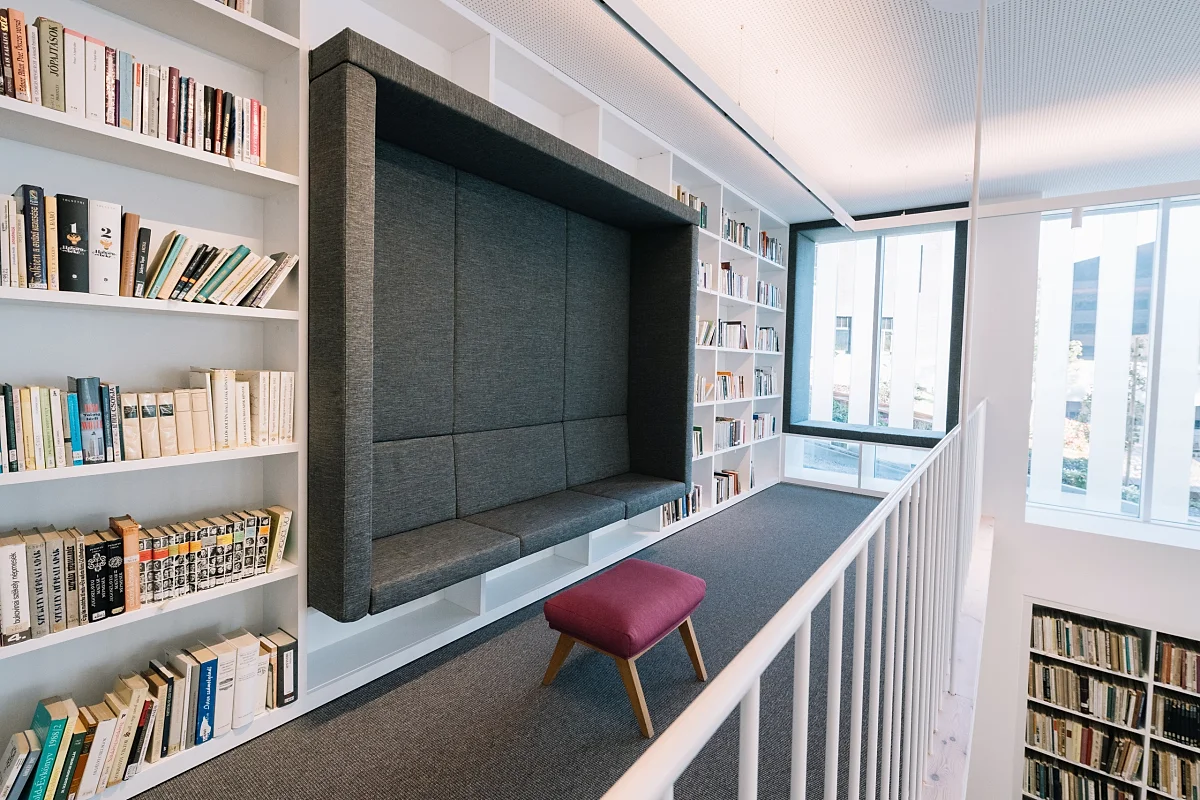
Perhaps the most striking feature of the revamped library is the new gallery space, which, as Balázs Marián put it, was created through exceptional effort. Built with innovative use of materials, the structure employs cross-laminated timber, allowing for the safe, flexible storage of an additional 200 linear metres of compact shelving and expanding the open-access collection by a further 300. Previously inaccessible shelves have also been made available to users.
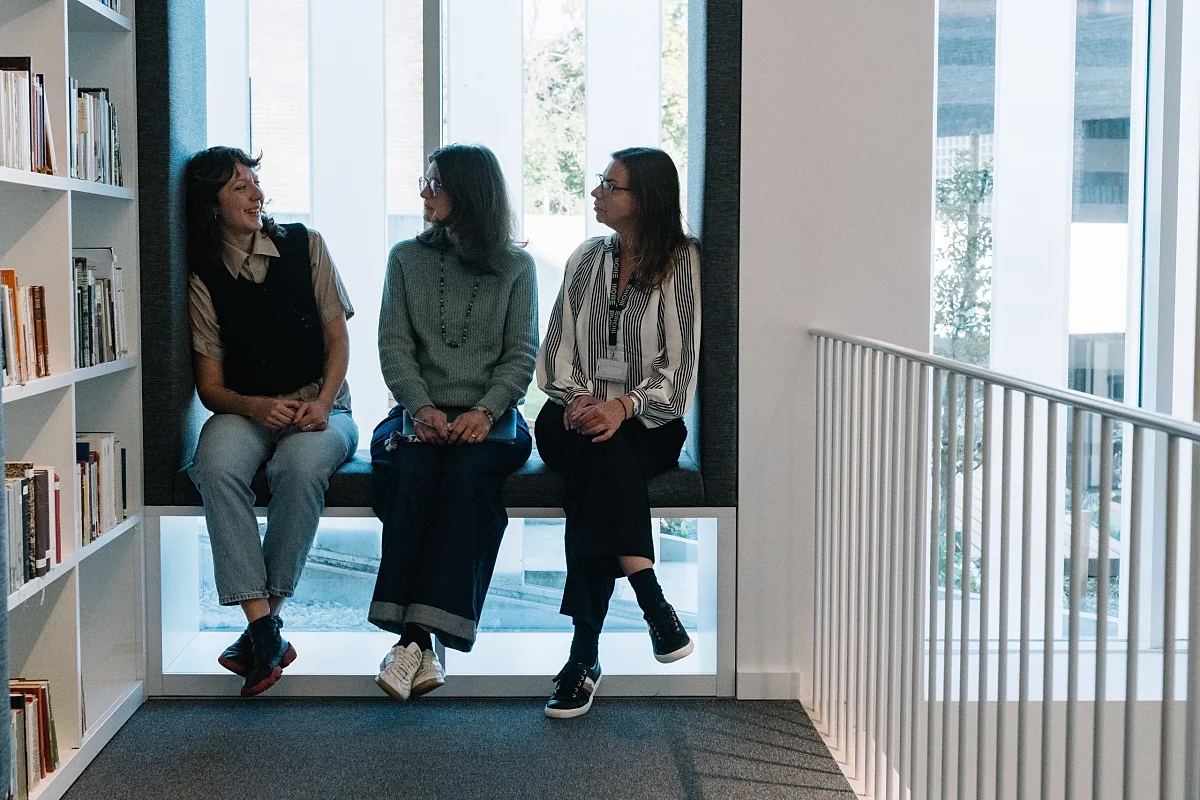
The gallery, though, has a purpose far beyond book storage. Alongside its acoustic function and the views it offers of the newly completed community garden, the designers have created unconventional areas for reading, studying, and even resting. The latter ties in with a playful idea from Head of the Library Klára Lévai, who plans to launch a competition titled “The Best Place to Sleep in the Library”.
The library’s story, however, does not end with the inauguration. The graphic design community is currently creating infographics that reflect the library’s visual identity, while photography students will close the semester with an exhibition presenting how they see the renewed space in daily use.

More news