MOME Zero in numbers – When data takes shape as sculpture
Covering themes from the MOME Forest and Apiary to the transformation of the Campus park and the cycling community, the course, led by lecturers Ákos Lipóczki, Dóra Rea Kövér and Mihály Minkó, set out to create data sculptures – physical installations that present data in a tangible way. The aim was to raise awareness by making the diverse outcomes of MOME Zero visible in a thought-provoking, attention-grabbing form.
The process began with research, including the collection, processing, and preparation of data underpinning the visualisation of MOME Zero’s sustainability projects. Students then followed a design thinking approach, moving step by step from exploration and interpretation through rebriefing and ideation to detailed development and final installation. Throughout, material choices and fabrication techniques were expected to respond to both the data sets and the sustainability themes they represented.
The four installations, exhibited in May in the Gond-űző building and the foyer of the BASE building, all approached the Zero programmes with different methods but a shared objective: to reveal the structures and systems that shape communities, landscapes, and identities.
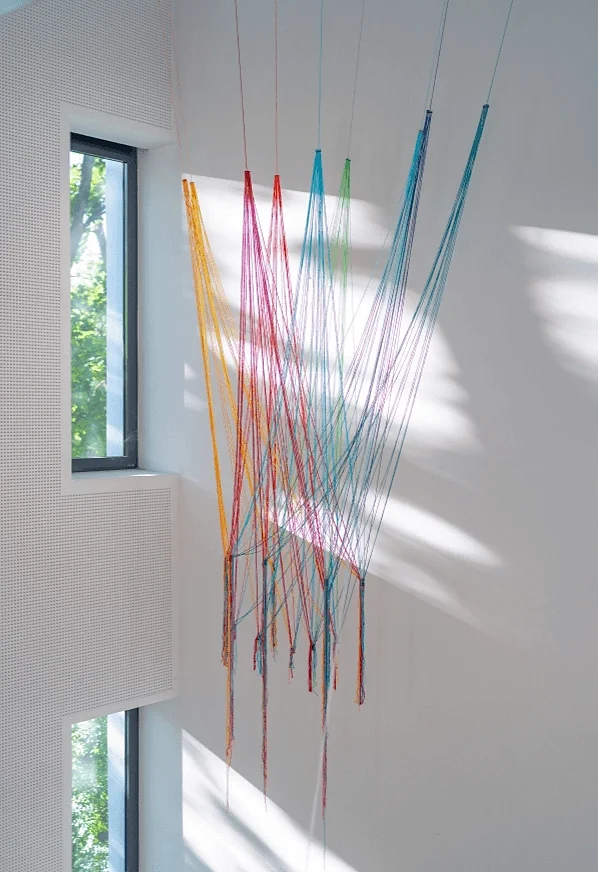
Lajos Czeglédi’s Network of Connections explores the community dynamics of MOME’s 2024 forest planting. Using colourful threads and spatial anchors, it maps the relationships among the 159 students and twelve planting teams involved. The visualisation illustrates the diversity of the community and highlights how students from different programmes intermingled in the MOME Forest initiative, which was designed not only to build community but also to shape attitudes towards environmental responsibility.
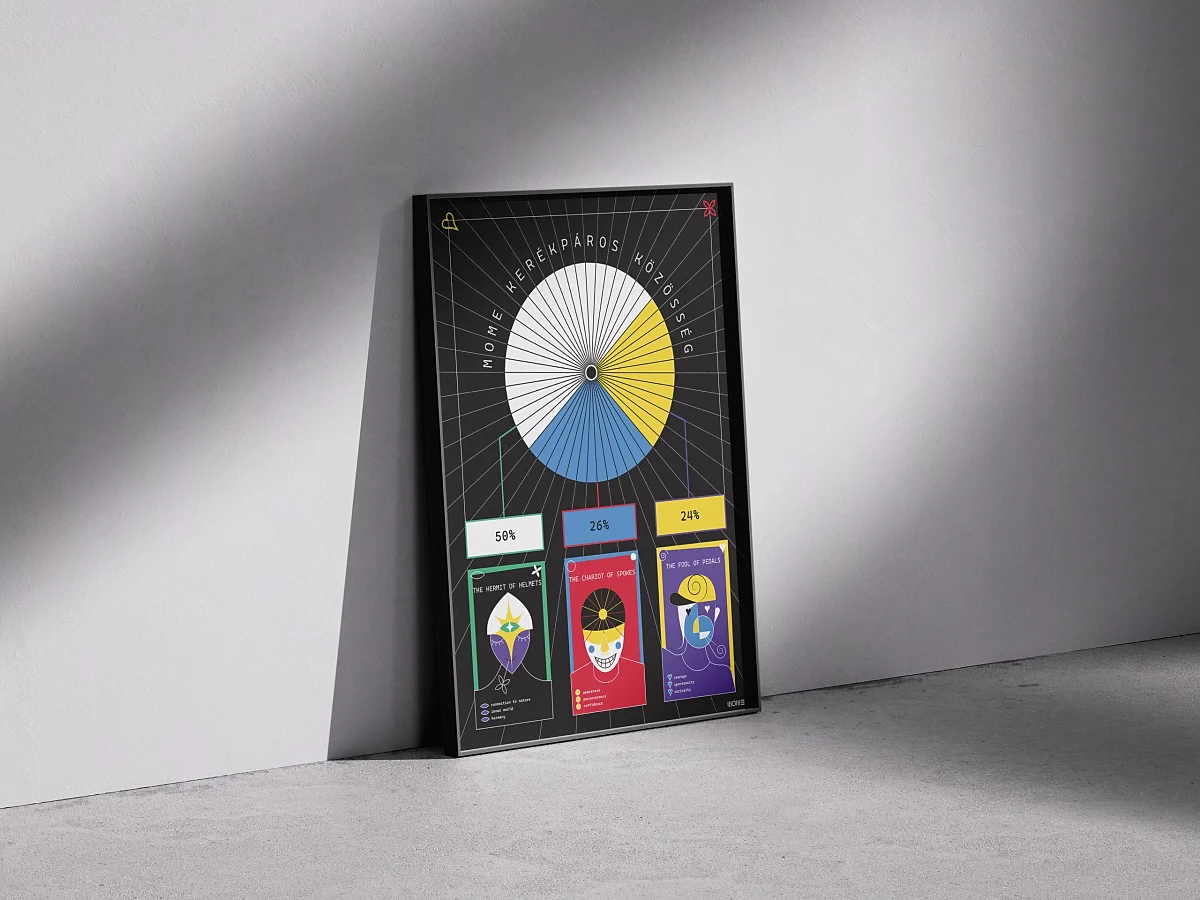
Naomi Czinkóczi’s infographic study Cyclist Archetypes of MOME profiles the Campus cycling community through three archetypes: the Helmeted Hermit, the Spoke Chariot, and the Pedal Maniac. Beyond a playful typology, it also reflects on individual attitudes to nature, mindfulness, spontaneity, and shared mobility, illustrated with statistical breakdown (50%, 26%, 24%). The project is at once analytical and whimsical, a visually clean yet culturally sensitive mapping of the community’s inner diversity.
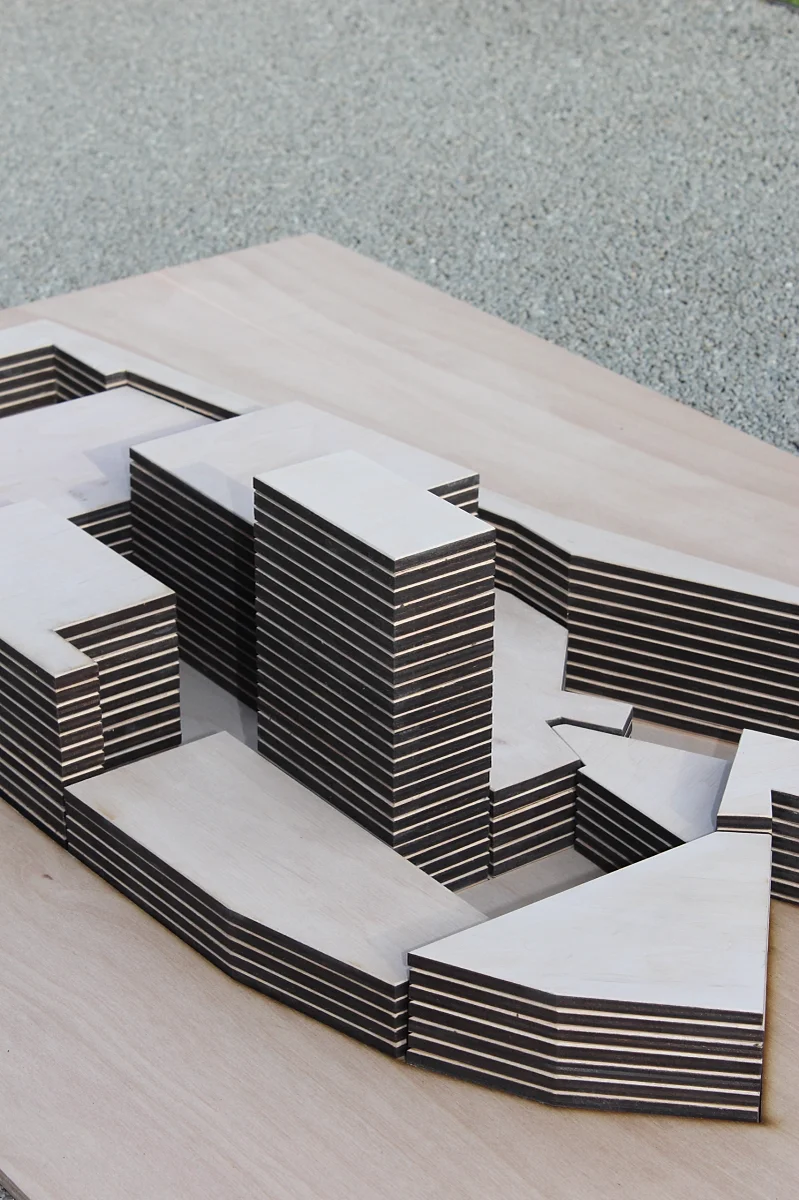
Emese Keceli-Mészáros’s Biodiversity in the Campus Park translates the plant diversity of the MOME Campus park into a data-driven, mock-up-like installation. Through the structure of spatial elements that can be assembled into the shape of a ship, it illustrates the distribution of species such as horse chestnut, serviceberry, birch, and others. The installation also highlights how the area designated for the community garden, currently low in biodiversity, will flourish once the development is complete.
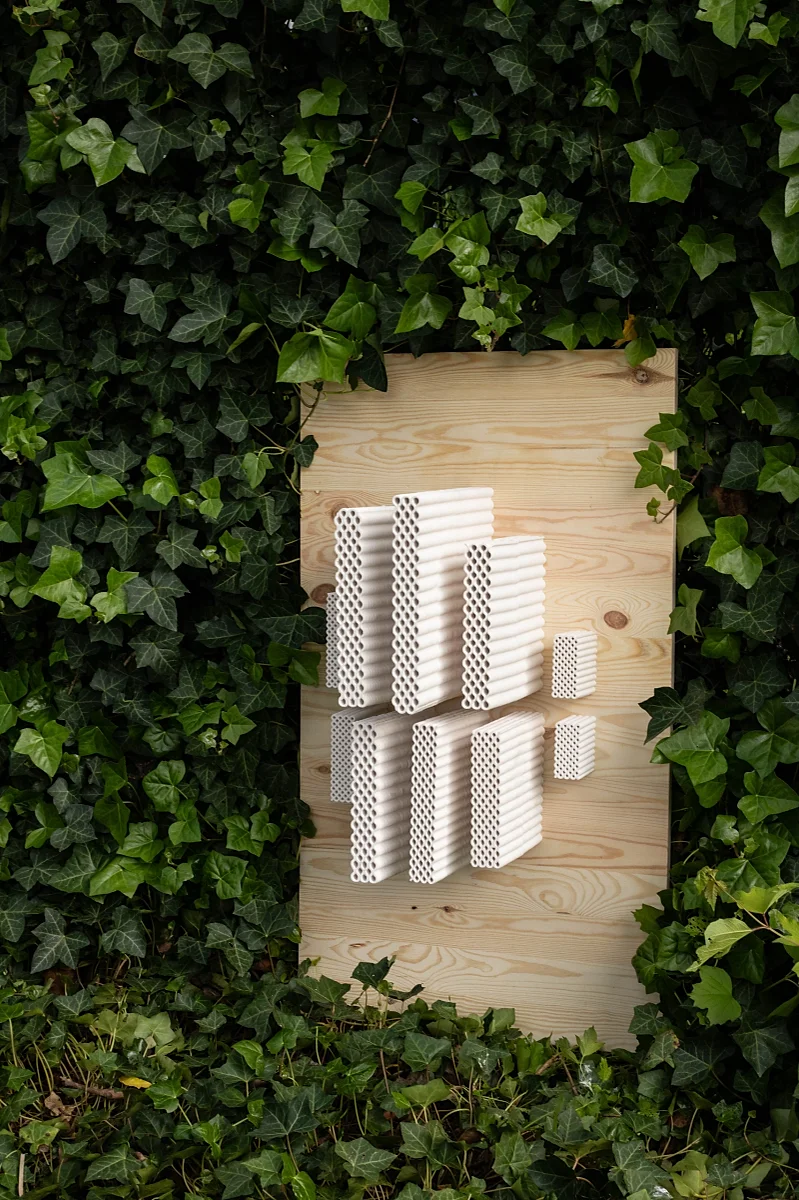
Péter Rozán’s 3D-printed installation Hive Data in 3D visualises data from the MOME Apiary by representing changes in hive weight. Expanding the technological and material palette of the exhibition, this work shows in which months were the MOME bees most active.
September will see the launch of two new MOME Zero projects: the opening of the community garden and a composting facility. The latter will be accompanied by an education and research programme, with sensors monitoring the composition of the perfect compost, and the data gathered here to be transformed into physical form – hopefully once again with the involvement of Designer Maker students.
More news