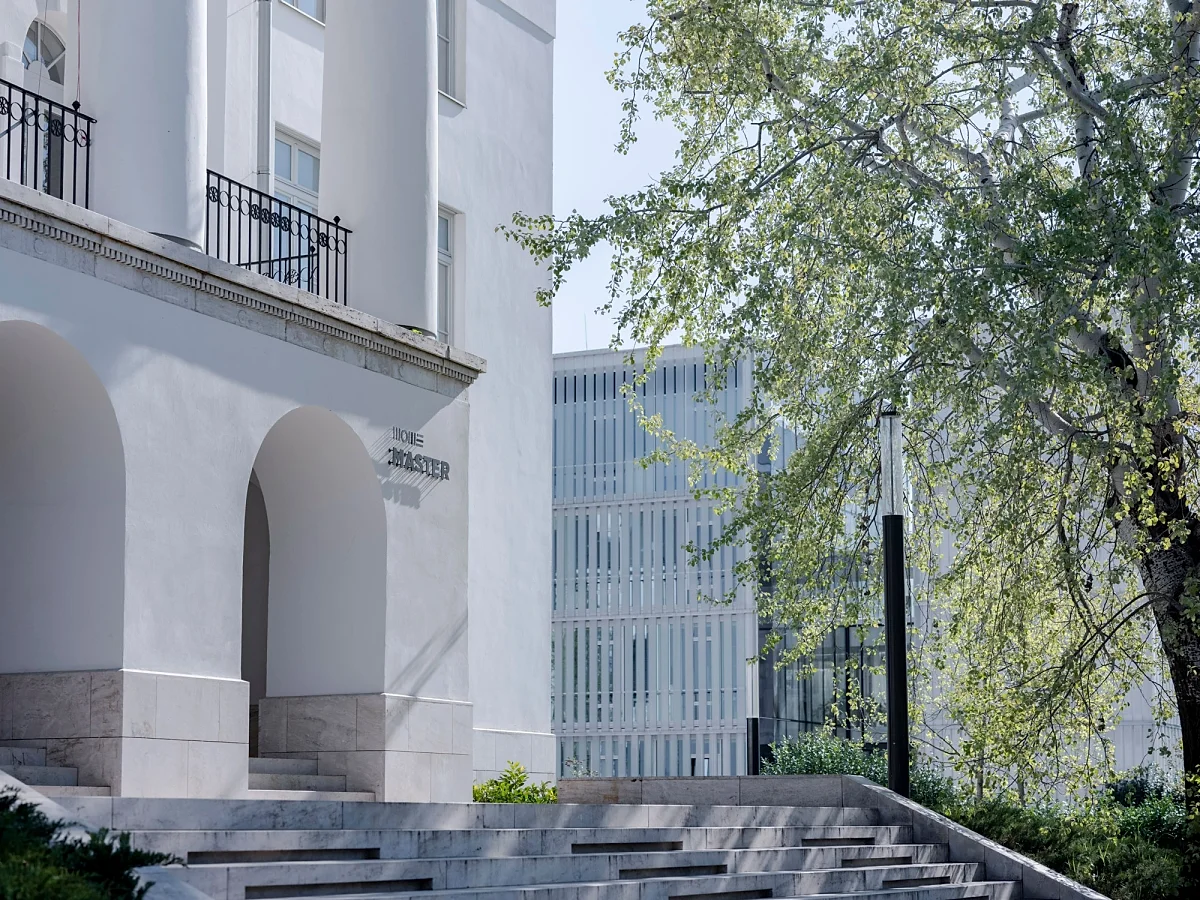
MOME Campus joins Budapest100 programme
The formerly manicured campus park, divided into neat grass sections, is being transformed into a more natural, sustainable garden with a focus on rainwater storage. This picturesque, free-flowing space will feature a rain garden designed by students, a community garden, a composting area, and the well-known beehives. As part of the Budapest100 programme, visitors will be able to enjoy a one-hour guided walk around the 1.5-hectare site, learning about its eco-friendly development, its iconic locations, and the variety of plants that now grow there. They will also have access to unique areas, such as the rooftop terrace of the MOME ONE workshop building, offering a bird’s-eye view of the campus garden and the surrounding Zugliget neighbourhood.
One of the most exciting stops is the MOME Apiary, where visitors will meet the two new bee colonies, in addition to the original ones. The tour will conclude at the Gond-űző building’s terrace, where the Herbarium exhibition will be on display. The walk will be guided by landscape architect and MOME’s sustainability lead Dániel Barcza, along with sustainability programme coordinators Éva Tornyánszki and Szilvia Weisz.
In addition to improving quality of life and enhancing the district’s ecosystem, the project offers an excellent educational opportunity. These developments are being designed in collaboration with students through courses and fieldwork, and the completed community garden, apiary, and composting area are integrated into the curriculum. For example, the concept for the community garden, currently under construction, was developed alongside students in the Permaculture Community Space and Garden course during the second semester of the 2023/2024 academic year. The planned green space will span over 450 m², with construction set to begin in the summer of 2025.
Let’s take a closer look at what’s in store: New walkways and steps will be constructed from wood or finished with wood cladding, a community lawn will be created around a circular bench, and experimental herb beds will also be set up. The garden will include plantings of fruit trees and berry bushes such as serviceberry, blackcurrant, raspberry, and jostaberry, along with fragrant wildflowers like lavender, oregano, wild thyme, and mountain periwinkle. Climbing plants and wall shrubs like elder, climbing hydrangea, and sloe will also be planted. Japanese anemone, begonias, and hydrangeas will line the steps, adding a decorative touch.
A composting station will be built, initially for the university’s internal green waste, but it marks an important step towards circular farming practices.
For anyone wanting to learn more about MOME’s apiary and its objectives, a workshop will offer a detailed insight. Created with ecological and educational goals in mind, the Apiary houses four hives and now produces honey. Alongside the original colonies, the Tóth and the Mézga families, the Mézengúz and Pempő families have recently moved in, adding to the university's stock of honey, propolis, and beeswax. These products will be used in various educational projects and creative workshops, and community events centred around extracting these materials from the beehives and the honey harvests provide opportunities not only for university citizenry but also for local schoolchildren to learn about beekeeping.
The workshop begins with a brief theoretical introduction about the history of the MOME Apiary and the role of bees in nature. The practical part takes place outdoors, where participants can safely observe the beehives, and the bravest can even pet the bees. During the session, they’ll also have the chance to taste honey and extract fresh honey from the four hives. The workshop will be led by founder of the Brunner Bee Farm and MOME’s beekeeper Tamás Kutasi and MOME Foundation’s Chief of Staff Eszter Sisák.
The events are free of charge, but spaces for the walk and workshop are limited, so early registration is recommended.
More news