Four project concepts at the FoodWave Course Week course
Led by Edit Blaumann, and with Melinda Doktor and Nóra de Jonge as facilitators, the course involved four teams, each developing a concept using the tools of speculative design, which were then exhibited at the MATE campus in Gödöllő to reach and inspire all the more people.
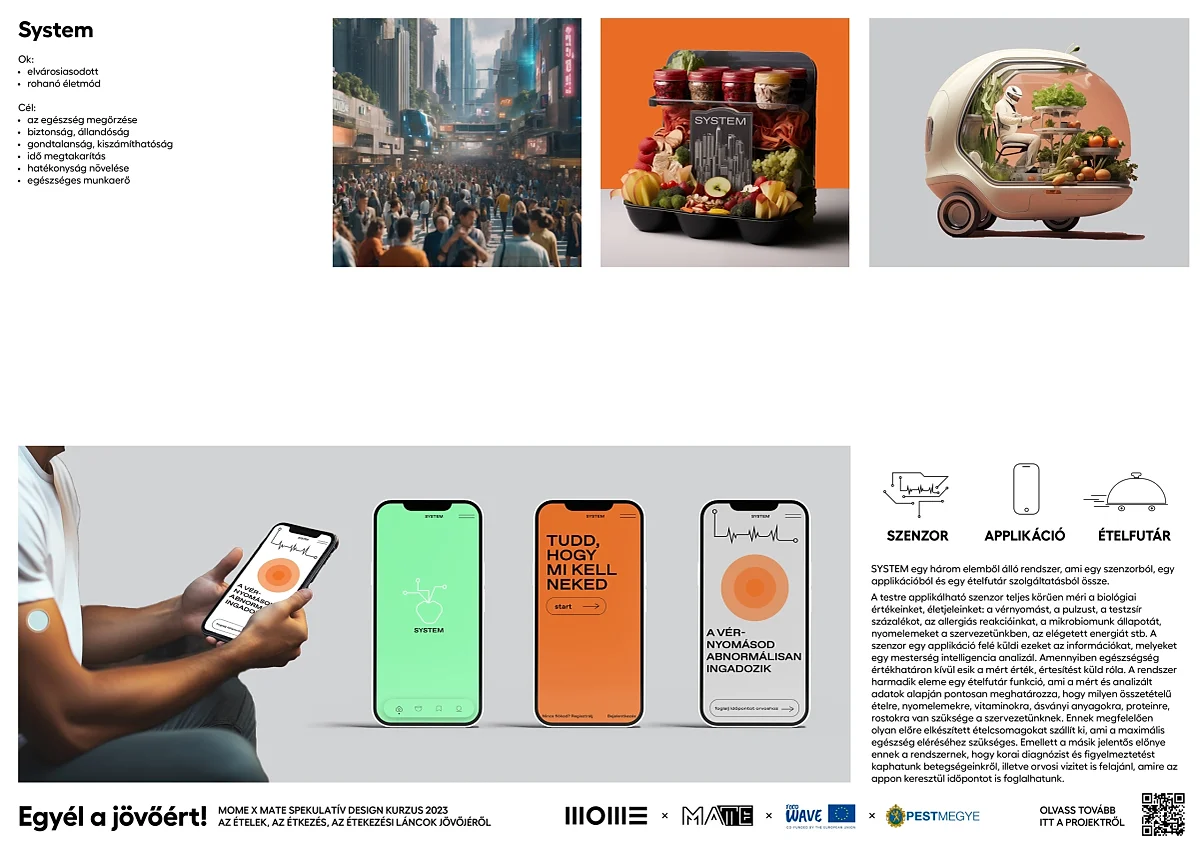
Concept SYSTEM is a system consisting of a sensor, an application, and a food delivery service. The wearable sensor measures vital signs, which are then sent to the application and analysed using artificial intelligence. If the measured value is outside the healthy range, a notification is sent. The third component of the system is a food delivery feature that uses the measured and analysed information to determine the precise composition of the food your body needs, and sends you pre-prepared food packages for maximum health. Another benefit of the system is that it provides an early diagnosis and warning about any emerging conditions, and can be used to make medical appointments through the application.
Members of team SYSTEM: Zita Fallenbüchel, Csenge Réka Béres, Zsuzsanna De Jong, Ali Lőrincz.
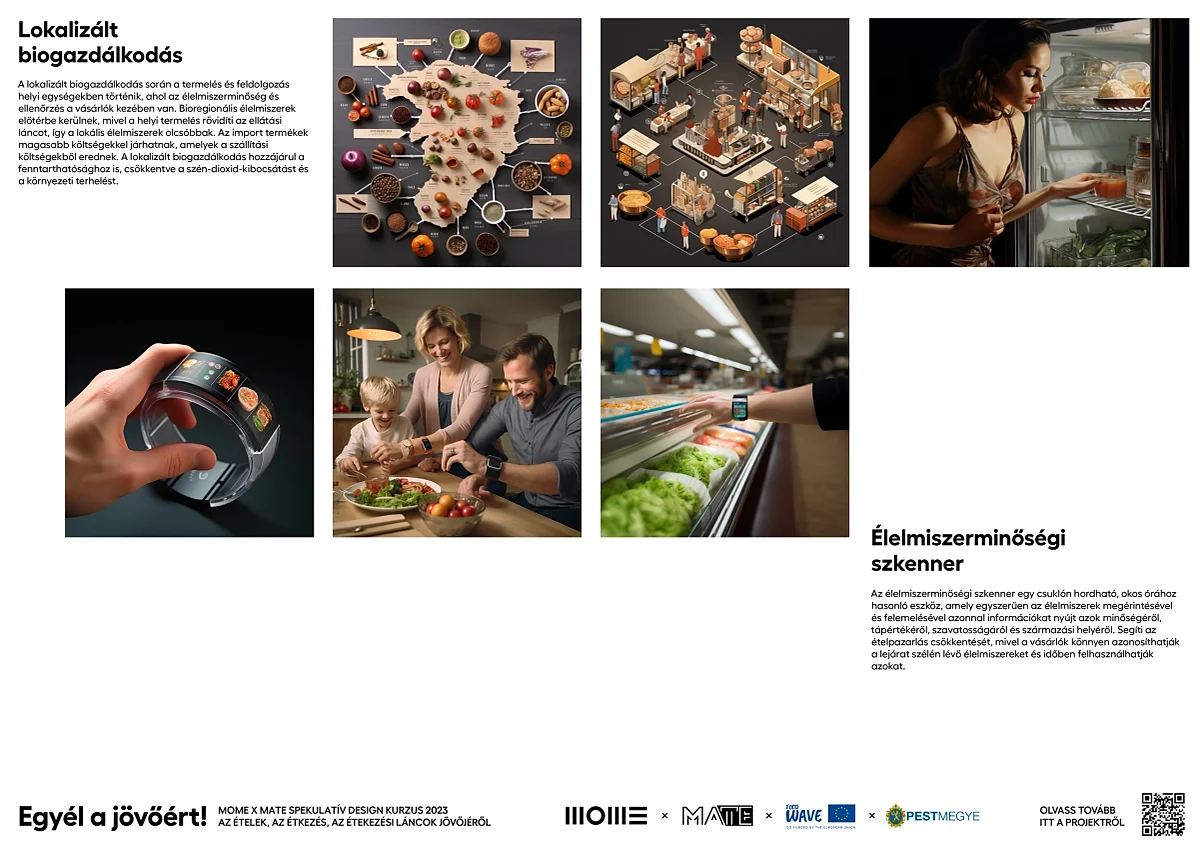
Another concept aims to prevent food waste with the help of a local organic farm and food quality scanners. The organic farm produces and processes the produce at local units, with food quality checks performed by the customers using scanners. The scanners can help reduce food waste by allowing customers to easily identify and use products that are about to expire, also contributing to sustainability and reducing CO emissions and environmental impact. The food quality scanner is a wearable device similar to a smart watch that provides instant information on the quality, nutritional value, expiry date and origin of food simply by touching the food. Members of the team: Mátyás Ulz, Nina Emma Halas, Levente Kovács, Balázs Réder.
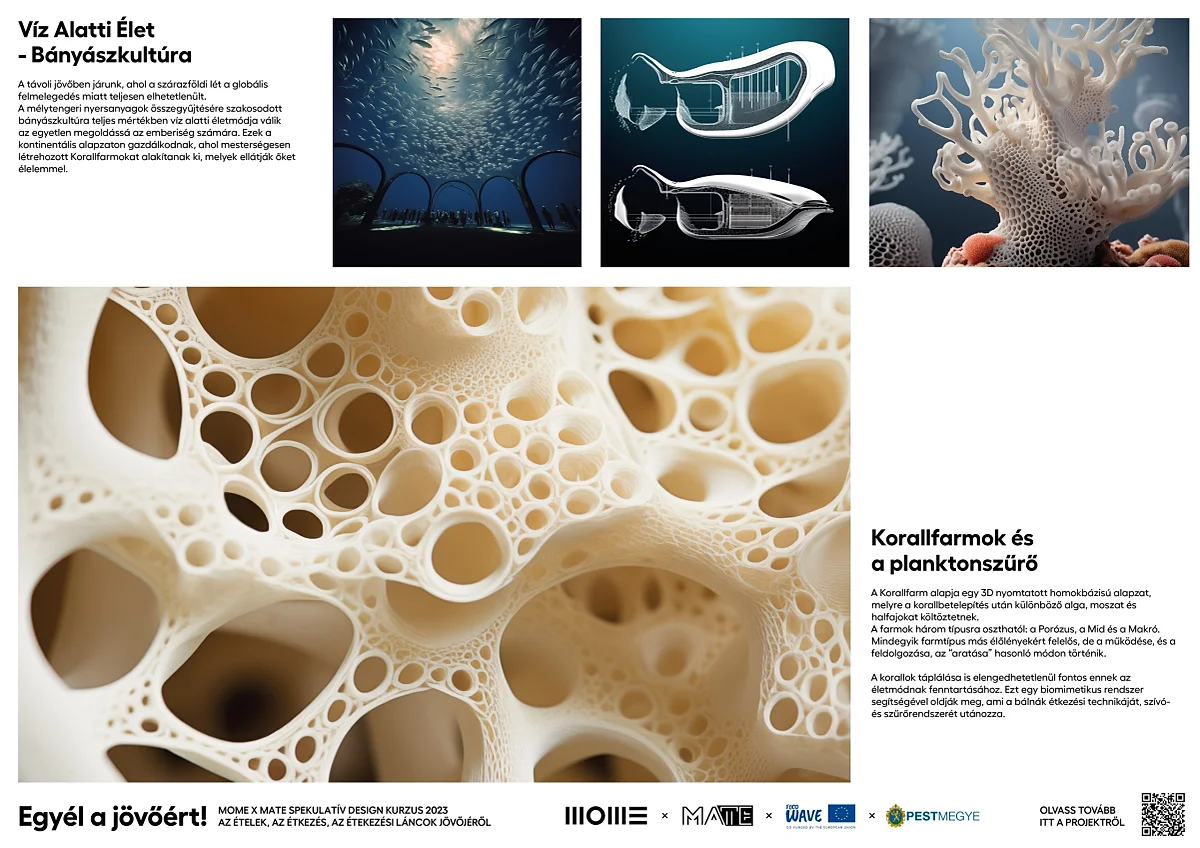
In the third concept, a mining culture specialising in the collection of deep-sea resources becomes the only solution for mankind, with a fully underwater way of life. They farm on the continental foundation, where they develop artificially created coral farms that provide them with food. The coral farms are based on a 3D printed sand-based substrate onto which various algae, seaweed and fish species are moved after coral colonisation. The farms can be categorised into three types: Porous, Mid and Macro. Each farm type has different organisms, but the workings, processing (harvesting) is similar. Members of the team: Haibo Illés, Botond Németh, Nikoletta Bodzán, Rea Szilvia Kovács.
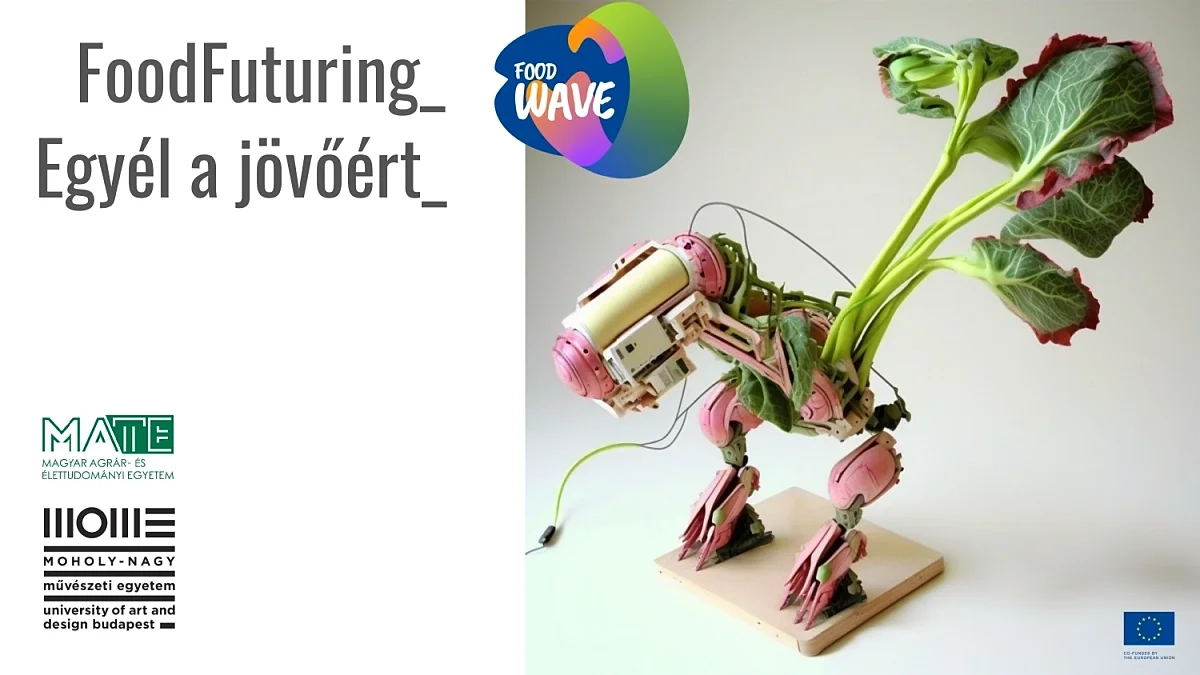
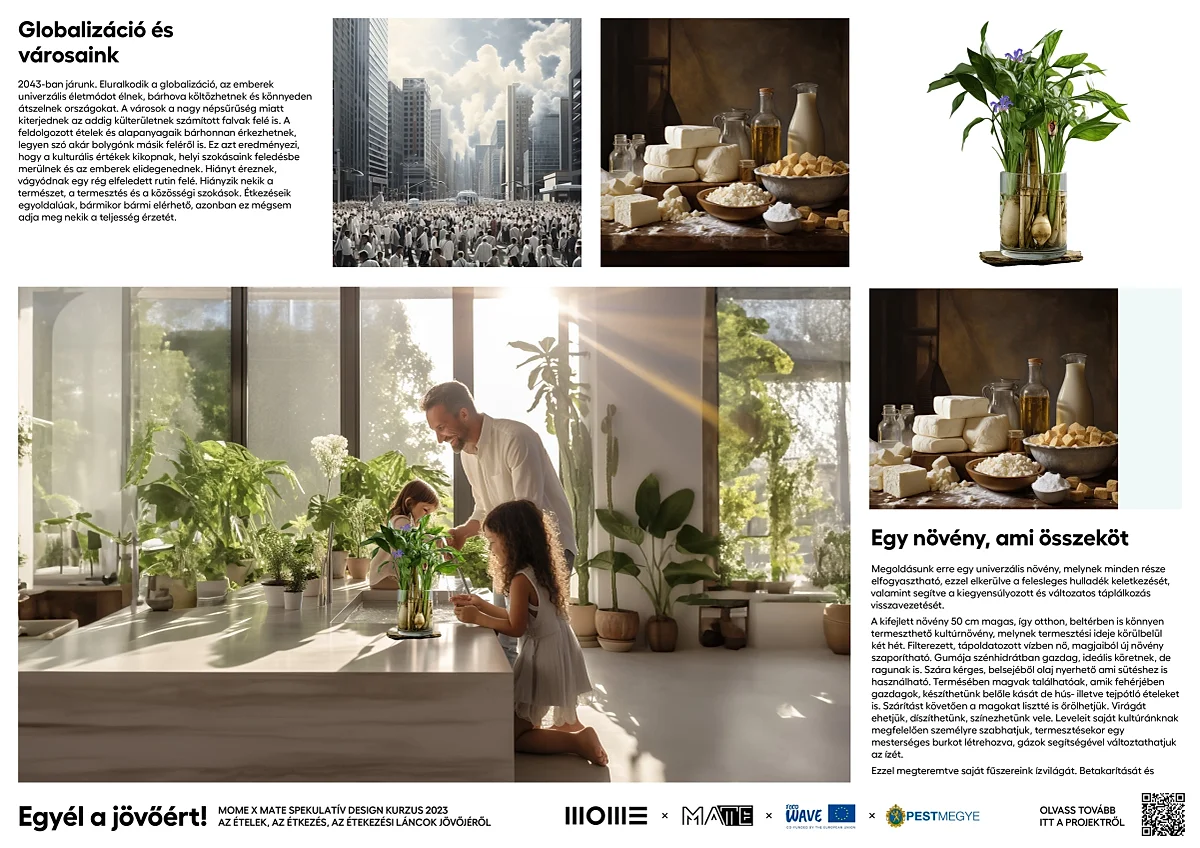
The fourth concept is focused on a plant that connects. All parts of this fictional plant can be consumed, avoiding unnecessary waste and helping reintroduce a balanced and varied diet.
The course was part of the Food Wave initiative, and the concepts were also presented in November 2023 in Milan at the at the Feed your future international event.
More news