Five of our graduates featured in the latest BIG SEE selection
A regional platform for emerging talent
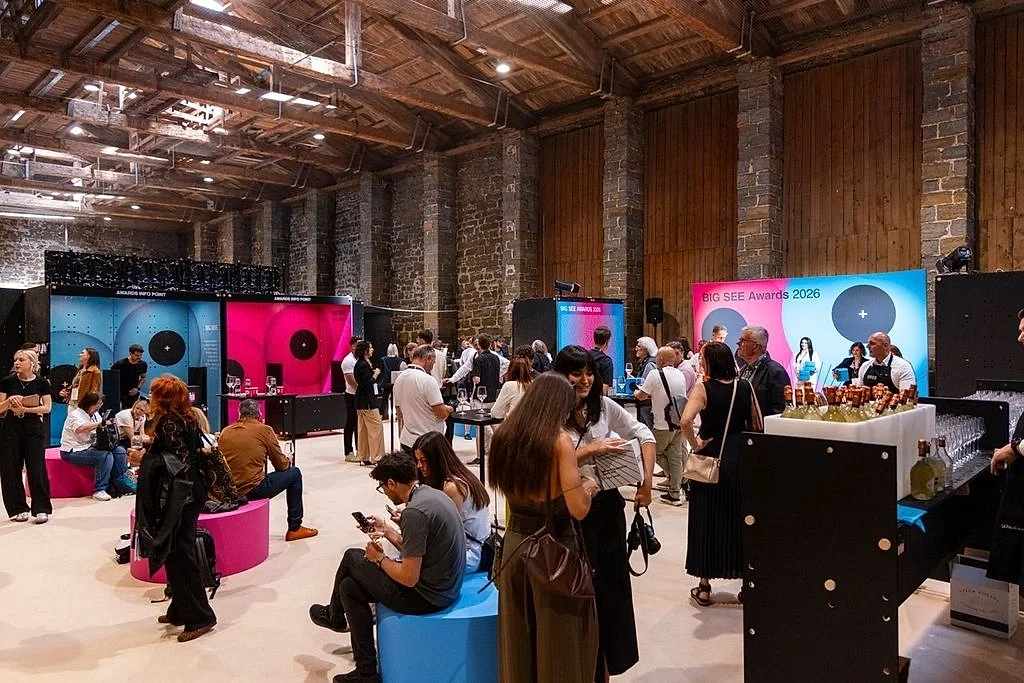
Based in Ljubljana, BIG SEE is an architecture and design platform connecting professional communities across Central and South-Eastern Europe. Since 2018, its awards have highlighted achievements in architecture, interior design, and product design across dedicated categories. The platform also organises festivals, conferences, exhibitions, and industry events.
First launched in 2025, the Perspectives Award returns for its second edition in 2026. It spans two disciplines – architecture and product design, with the latter also encompassing fashion and textile design. This year's selection features practitioners from Hungary, Italy, Slovenia, Croatia, the Czech Republic, Romania, Albania, and Türkiye, among others.
Candidates are selected through a professional nomination process. Architects, designers, educators, researchers, editors, and curators invited by BIG SEE put forward emerging practitioners whose work already shows a distinctive and characteristic approach to design. MOME faculty members Dóri Tomcsányi and Péter Molnár are among the Hungarian experts invited to nominate. In the product design category, Dorottya Bató and Valentin Szarvas were nominated by Dóri Tomcsányi, and Nóra Szilágyi by Péter Molnár. The Hungarian nominators also include László Bence Dobos, a graduate of the MOME Doctoral School.
Fashion, material culture, and personal narratives
Nóra Szilágyi graduated from the MOME Design MA programme in 2025 with the Rector’s Special Award. Her independent projects are developed in collaboration with manufacturers, local communities, and craftspeople. Her Reflecta lighting collection draws on the surviving equipment and manufacturing expertise of the former Szarvasi lamp factory, carrying its industrial legacy into contemporary design. The project was also shown in Budapest as part of a citylight exhibition produced jointly by MOME and JCDecaux. Another standout project of hers is At Least, a home workout bench that also functions as storage furniture, as well as EVE, a community-based emergency alert system that notifies nearby residents in the event of danger. Both received a Red Dot Design Concept Award.
Dorottya Bató, who graduated from the MOME Fashion and Textile Design MA programme in 2025, has three collections featured in the selection. RE/COVER reimagines the embroidered motifs of a family heirloom tablecloth through sculptural forms, contemporary pattern-cutting techniques, and 3D-printed fastenings. Don't Believe Everything You See uses zero-waste pattern cutting to examine transparency in the fashion industry. Dorottya’s diploma collection, DNAI, explores hyper-personalisation, investigating how online platforms, user data and artificial intelligence shape consumer behaviour, the way we dress, and the choices designers make.
2023 MOME Fashion Design MA graduate Valentin Szarvas uses his eponymous label to examine the relationship between clothing and the wearer. In Became Silence, garments are conceived as intimate spaces of protection. Bújj-bújj, zöld ág reflects on concealment, visibility, and shifting identities, while Folding Back to Myself approaches sustainability through the dismantling, reconstruction, and survival of garments.
Architecture – communities, heritage, and the city's hidden layers
Julianna Skrabák's 2024 MOME architecture diploma project, Place in Between – Alluvial Spaces and Strata Communities along the Danube, reconnects overlooked, underused stretches of Budapest's riverfront with local micro-communities. Between Nehru Park and the Danube, the project creates a network of galleries, saunas and spaces set into the embankment wall, all following changes in the river’s water levels. At the heart of the project is the sauna, conceived as a ritual space that offers a break to step away from the rush of city life and slow down.
Her projects featured on the BIG SEE platform also include Novella Quarter, developed with Marcell Korhán. Created for a competition in Debrecen, it casts the architect as a coordinator who works with local cultural communities to establish how the space will be used. In the experimental project DUNA.POSTA, hand-crafted pieces of driftwood carry messages between strangers, turning the river into a natural means of communication for a spontaneous community. Skrabák’s nominator underlined her thoughtfulness, perseverance, and ability to frame architectural questions in social and ethical terms.
The girls can scan collective comprises Júlia Bakucz, Kata Ramocsai, Lilla Kammermann, Lilla Luca Varga, and Eszter Hegedűs, who graduated from the MOME Design Theory MA programme in 2019. Founded in 2020, the collective develops research-led projects that bring together Central and Eastern European architectural heritage, feminist perspectives, and overlooked histories of the built environment.
Tripping on Modernist Monuments explores regional approaches to preserving modernist architectural heritage. The collective sought out local initiatives in Kyiv, Kharkiv, Chișinău and Bucharest, whose methods could also be applied in other post-socialist cities. Women’s Day Statue Unveiling highlighted the role of women in engineering and architectural education. At the Budapest University of Technology and Economics, a beeswax candle shaped like a woman’s head was unveiled in tribute to the institution’s past and present female students. The performative action continued in 2025, prompting discussion about more inclusive forms of institutional memory.
The Perspectives Award’s English-language platform places the work of the five MOME-affiliated nominees in a regional context, while its nomination system supports emerging practitioners through recommendations from experienced professionals. For MOME students and alumni, the selection offers another opportunity to gain exposure in an international professional setting and to bring their work to a wider audience.
More news