Further sustainability courses
Circular economy – Leftover Materials Bank
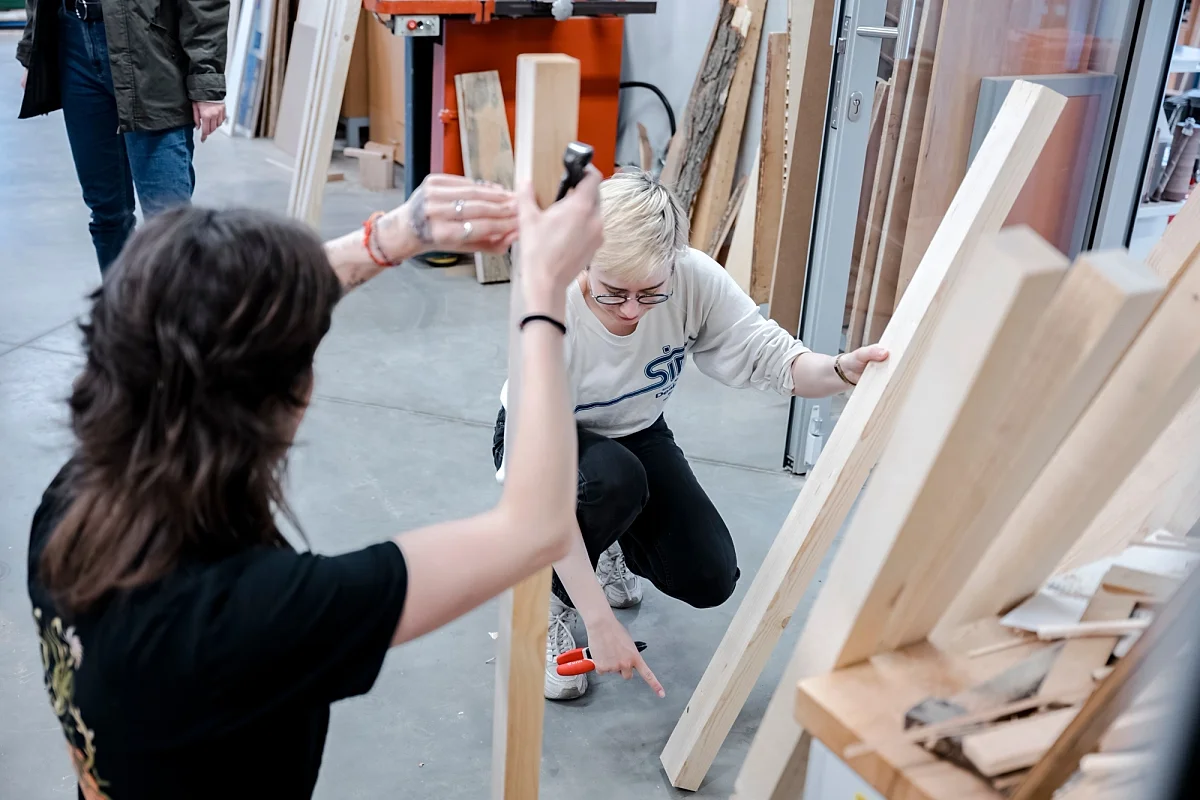
The course tackles a common yet often overlooked issue: how to reuse high-quality leftover materials generated in MOME TechPark and the Home Spaces. The goal was to develop a working leftover materials bank together, where anyone can drop off or pick up materials, returning them to circulation through new projects.
During the course, students traced the movement of materials through the MOME TechPark workshops and Home Spaces, explored options for waste handling and reuse, and looked at why the principles of the circular economy matter in practice.
They covered common material types – including wood, textiles, plastic, and metal – along with handling, reuse, and recycling options, as well as storage and logistics systems, the basics of the labelling they rely on, and what to consider when designing for community use.
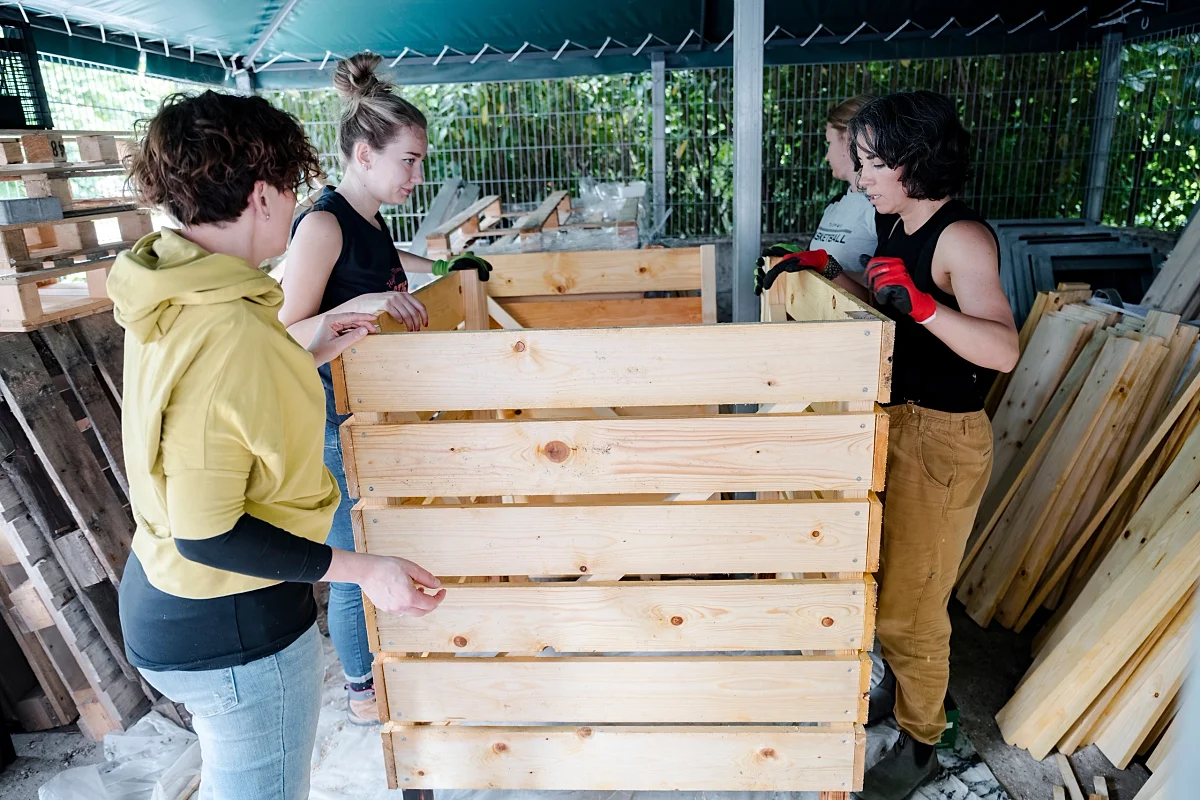
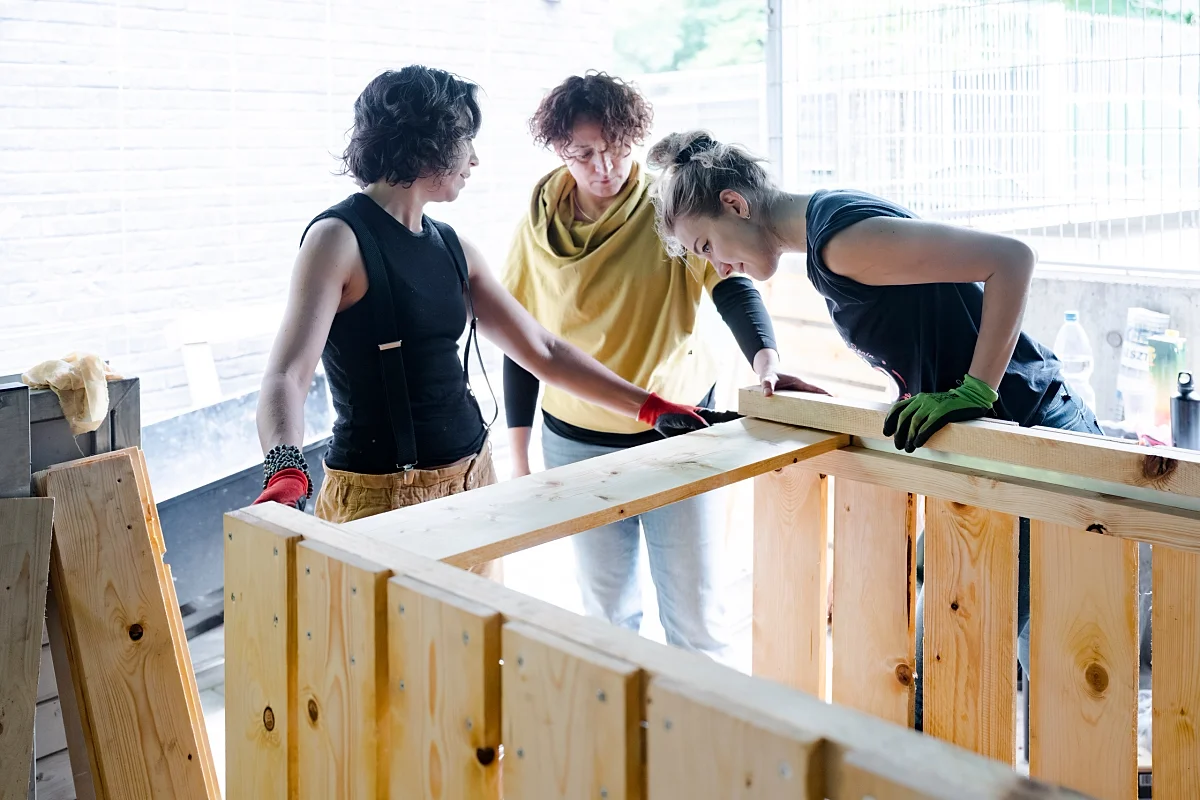
As the culmination of the course, students designed the MOME Leftover Materials Bank, including its storage and distribution system, as well as its signage and visual communication, then built and set it up to support sustainable creative work at MOME over the long term.
Regenerative design – Composting system
The course aims to involve students in reducing green waste on campus while building a deeper understanding of regenerative design principles. It focuses on urban green infrastructure, keeping plant-based organic waste on site, material flows, and community involvement.
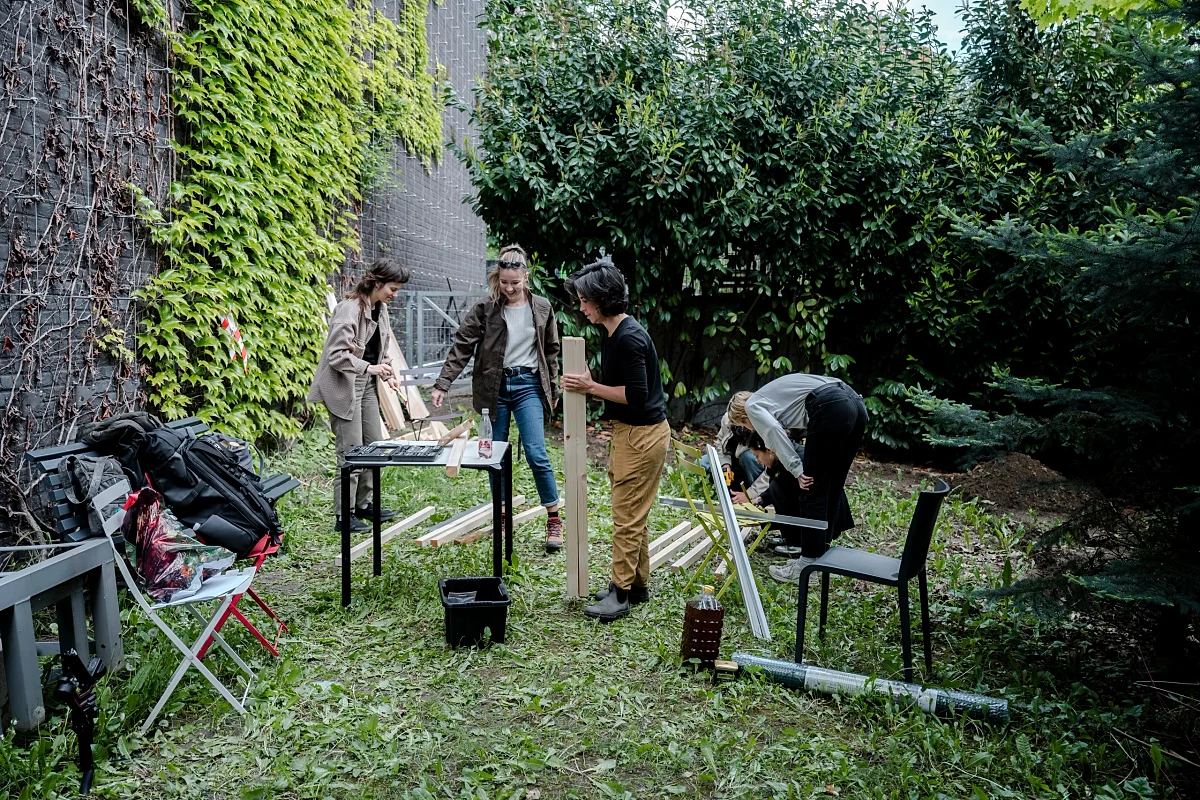
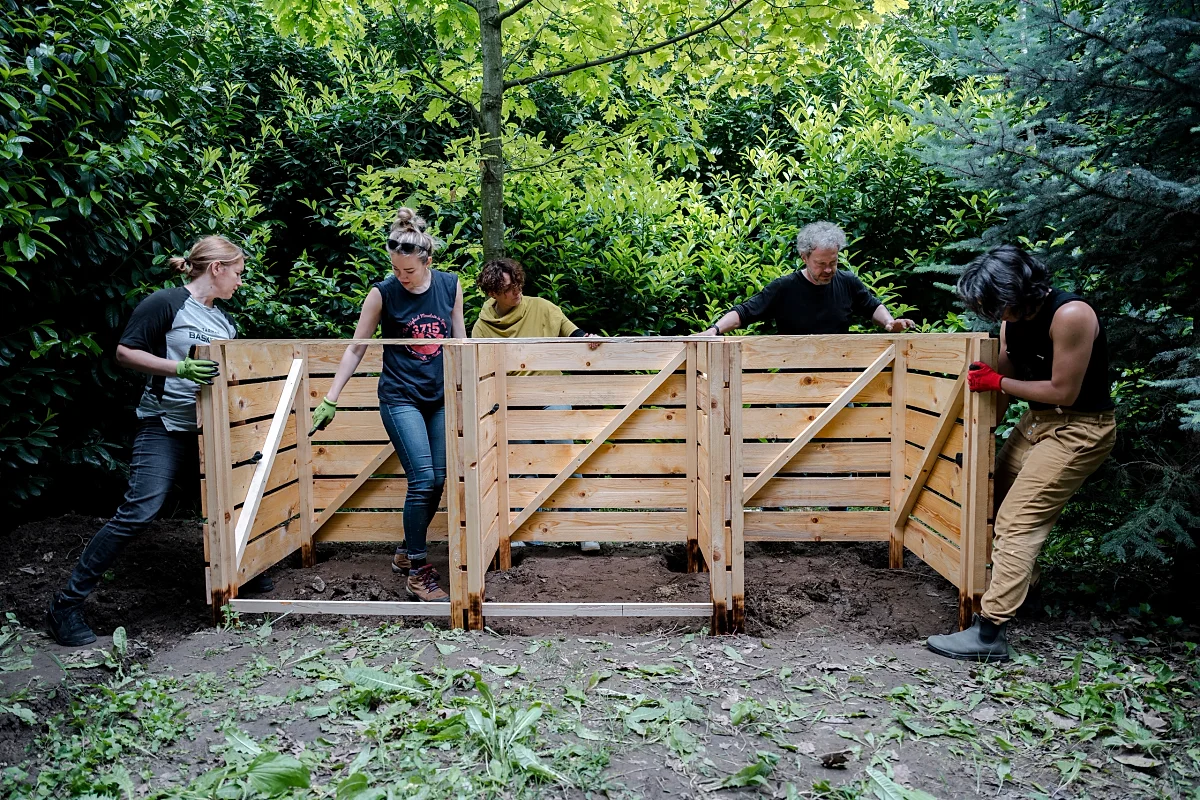
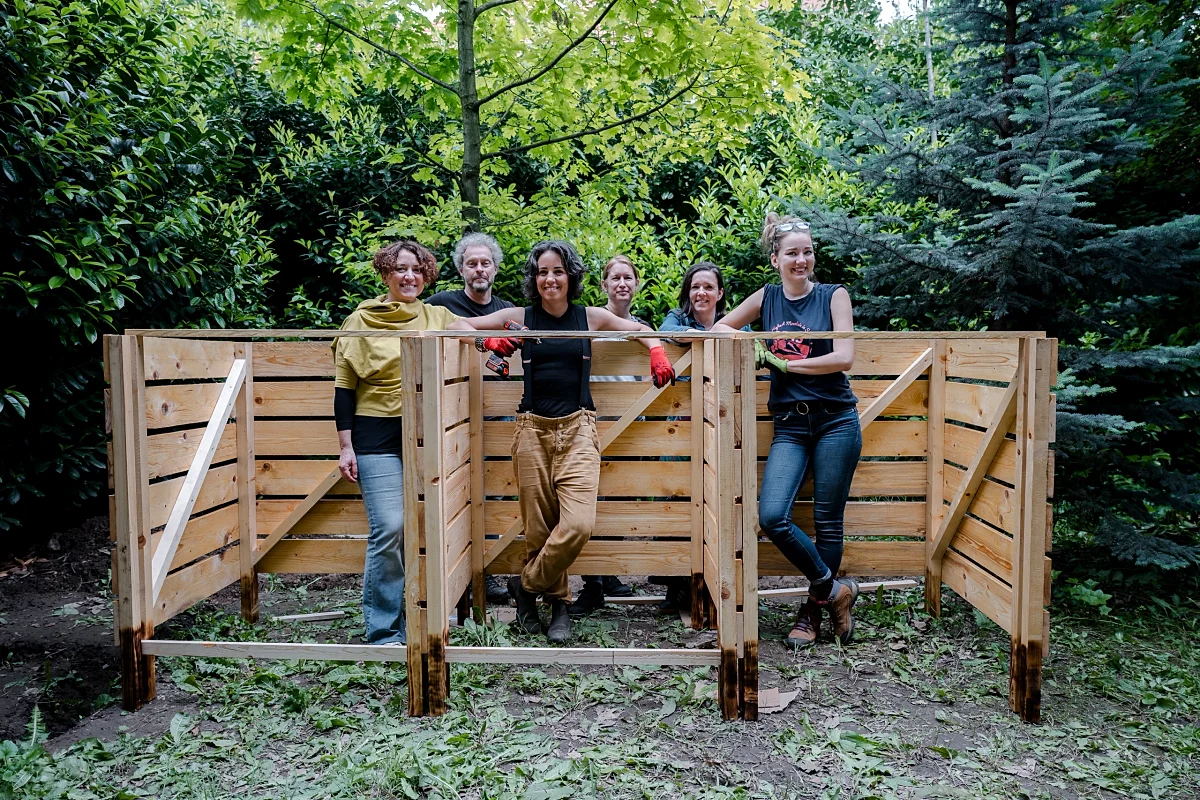
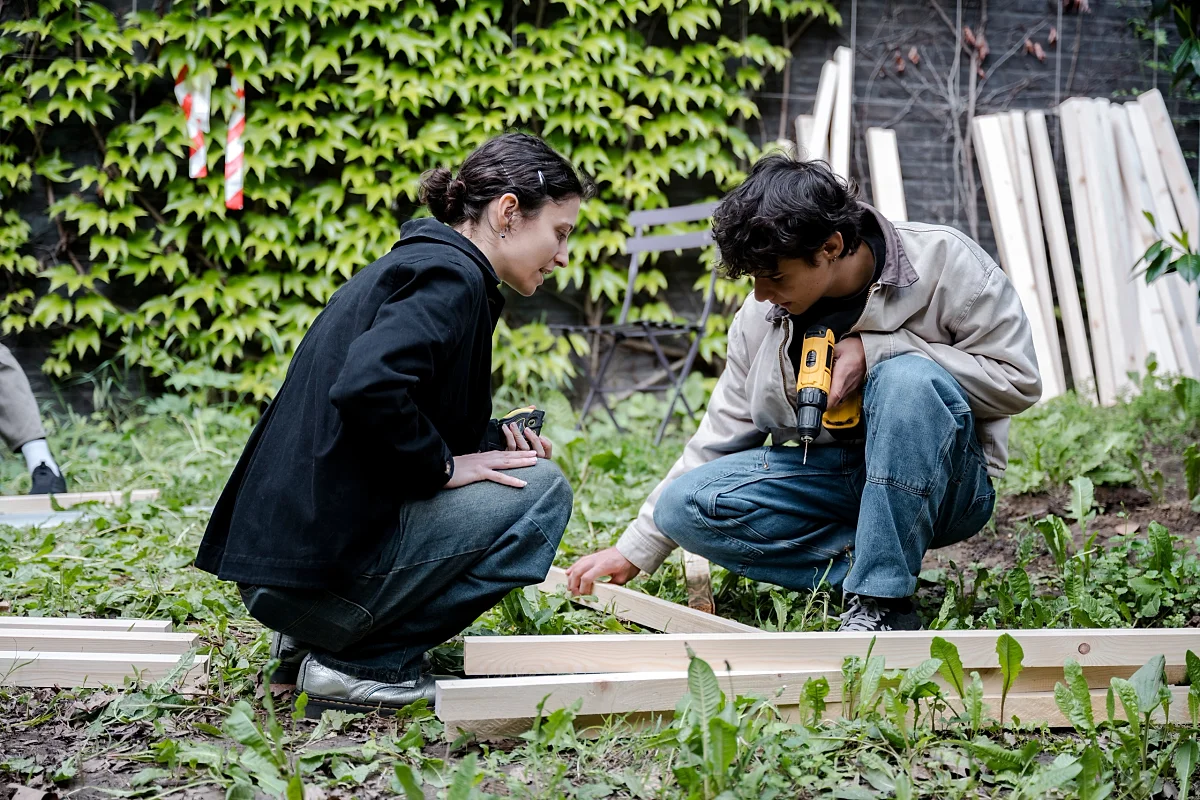
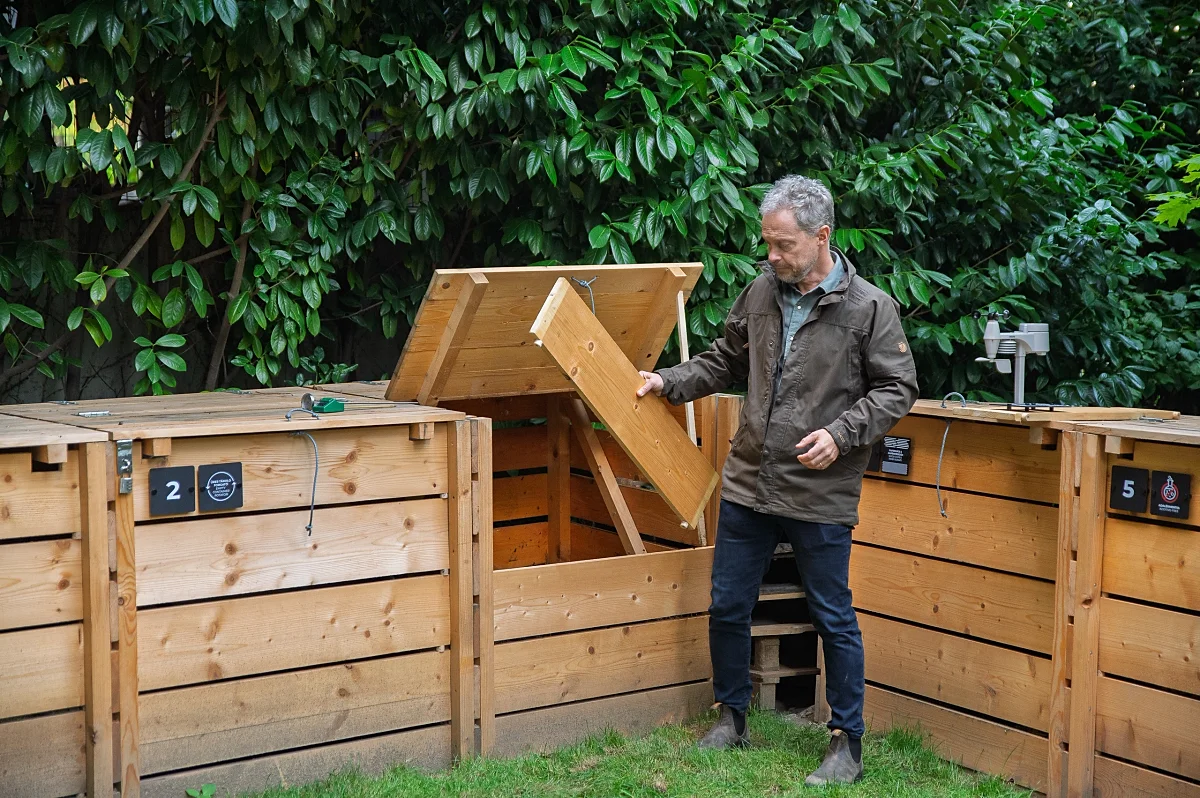
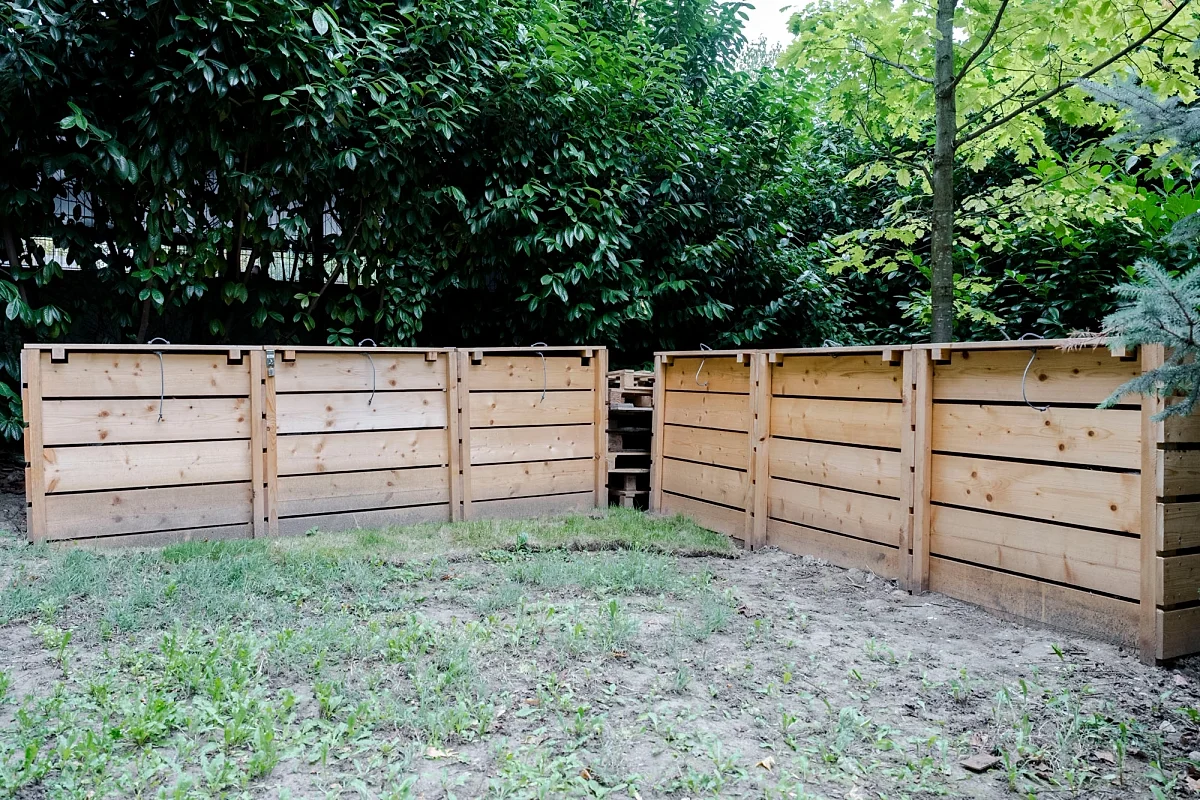
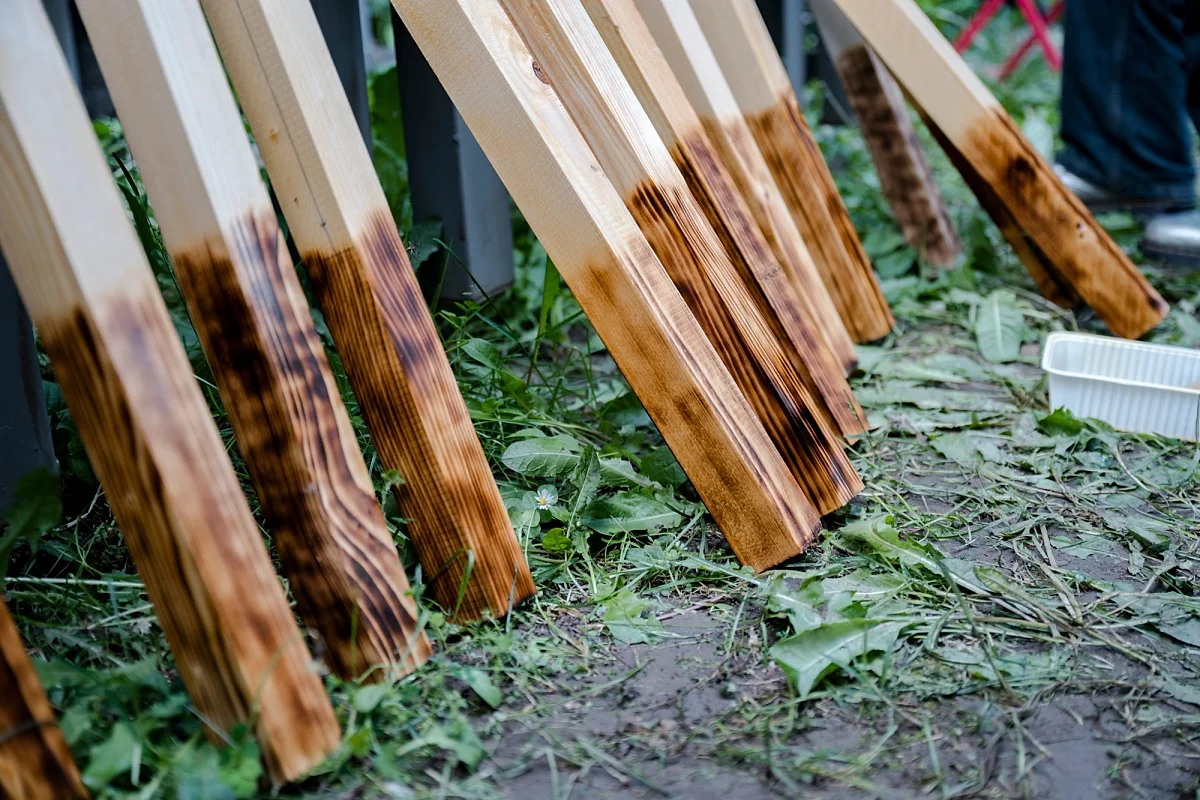
Students designed the MOME Gilisztár – Composting system, including its capacity and storage setup, then built it, treated it with beeswax from the MOME Apiary, and began filling the composting units.
The composting system supports the sustainable handling of green waste and provides a habitat for a range of beneficial organisms, including microorganisms, worms, and other soil-dwelling life forms.
Biodiversity – Herbarium
The Herbarium (plant collection) course was designed to fill a clear gap, with students mapping and documenting plant life on campus based on both objective data and subjective observations.
Students came to understand the value of local natural heritage, as well as more than one hundred plant species they encounter every day without being aware of them, along with their properties and role in the campus garden ecosystem. Botanical knowledge was combined with individual artistic interpretations, with plants explored not only through classification but also through a range of creative approaches. As part of the Herbarium, cyanotypes, distressed prints, copper prints, and 3D scans were produced from the collected and scientifically documented plants, each highlighting a distinct property.