Projekt mentoring
Data in space, 2025
As part of the course run jointly by the Designer Maker programme and the Sustainability Office, second-year Designer Maker BA students explored how a large-scale community event such as the MOME forest planting shapes student networks, what defines the university’s cycling community, and how the diversity of the vegetation in the Zugligeti Road Campus can be grasped. The data-driven installations and sculptures created during the course articulated MOME Zero’s achievements in physical form and contributed to raising awareness.
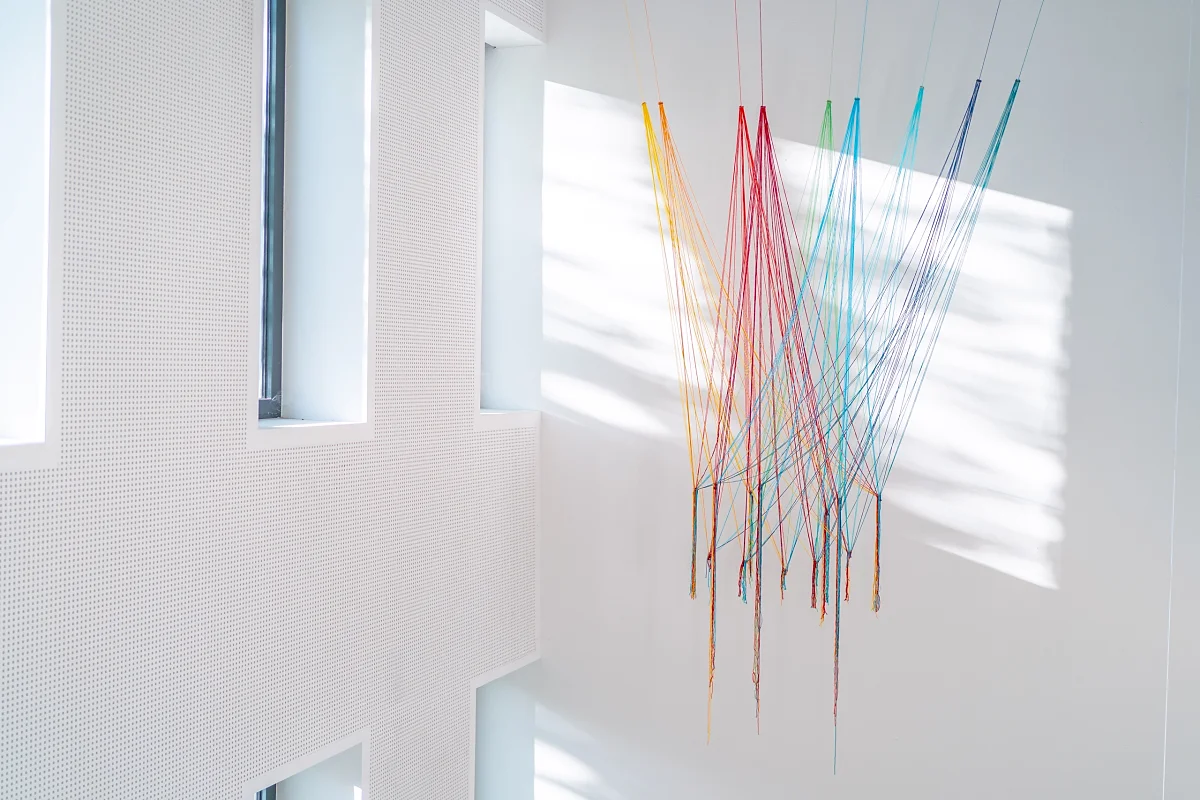
Lajos Czeglédi’s Network of Connections maps the community dynamics of MOME’s 2024 forest planting. Using colourful threads and spatial anchors, it maps the relationships among the participants. The visualisation illustrates the diversity of the community and highlights how students from different programmes intermingled in the MOME Forest initiative.
Naomi Czinkóczi’s infographic study Cyclist Archetypes of MOME profiles the Campus cycling community through three archetypes. Beyond a playful typology, it also reflects on individual attitudes to nature, mindfulness, spontaneity, and shared mobility, illustrated with statistical breakdown.
Emese Keceli-Mészáros’s Biodiversity in the Campus Park translates the plant diversity of the MOME Campus park into a data-driven, mock-up-like installation. The installation also highlights how the area in front of One and Two designated for the community garden, currently low in biodiversity, will flourish once the development is complete.
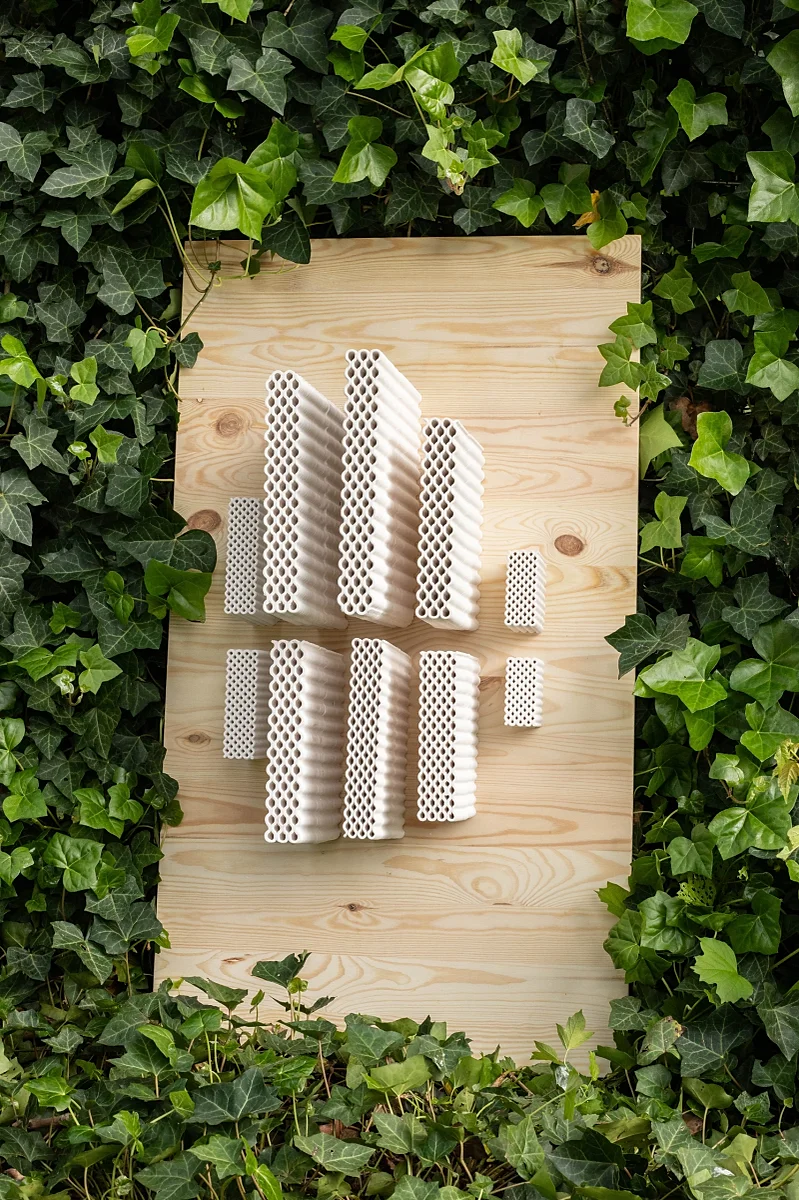
Péter Rozán’s 3D-printed installation Hive Data in 3D visualises data from the MOME Apiary by representing changes in hive weight. Expanding the technological and material palette of the exhibition, this work shows in which months were the MOME bees most active.
Course leads: Ákos Lipóczki, Dóra Rea Kövér, Mihály Minkó
Course support on behalf of the MOME Zero team: Éva Tornyánszki and Szilvia Weisz
Green Cradle
The Green Cradle project supports the survival of newly planted saplings, reducing maintenance needs and costs during the first five years critical for survival.
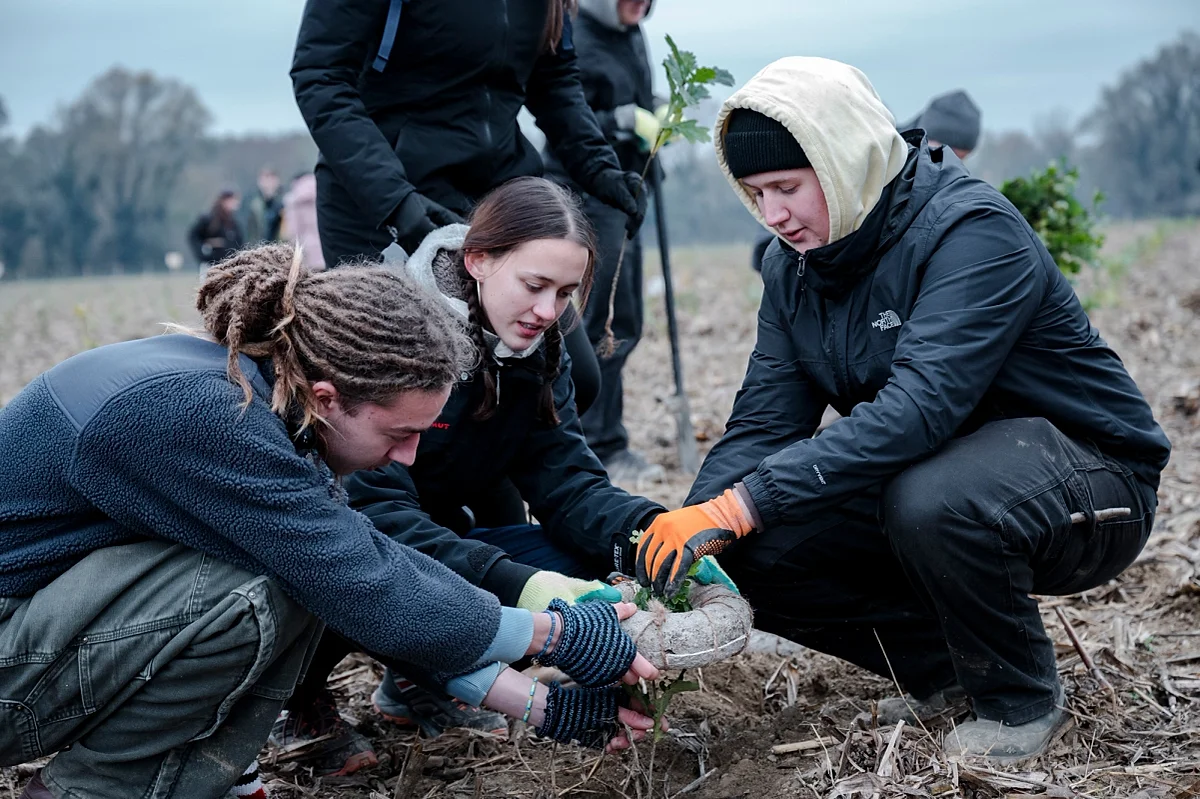
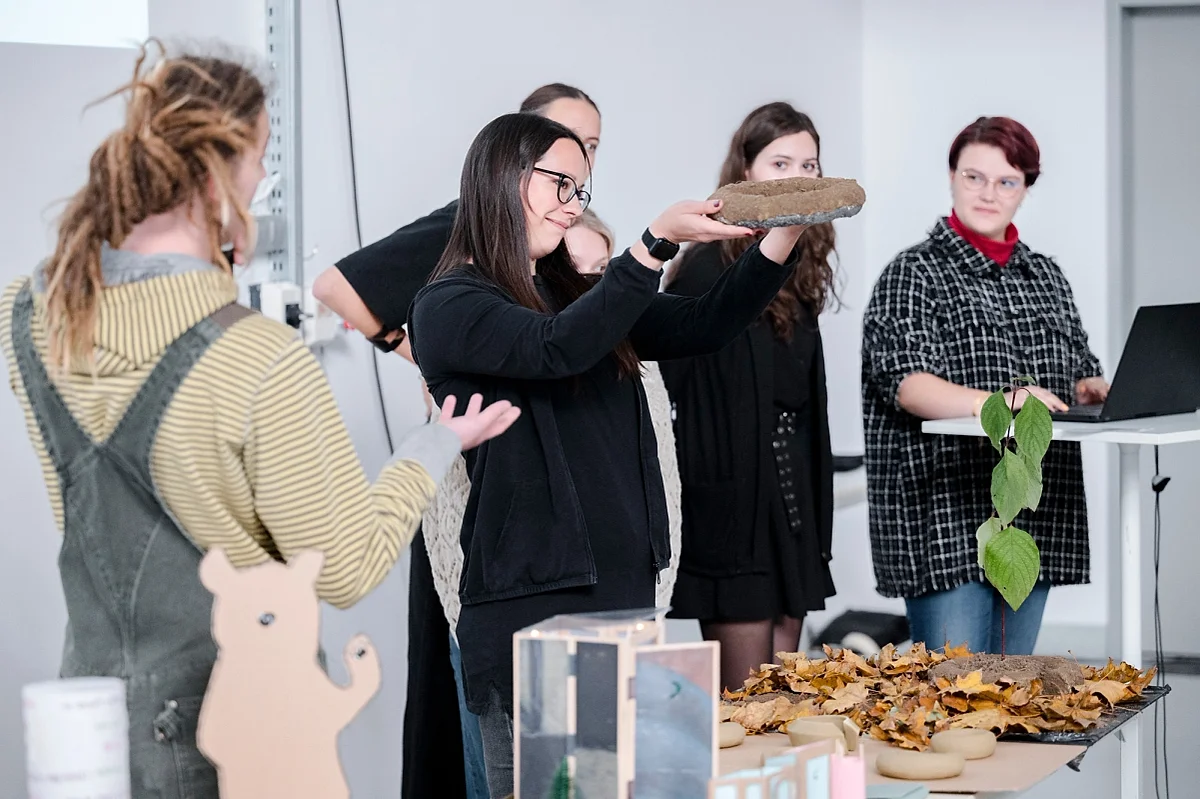
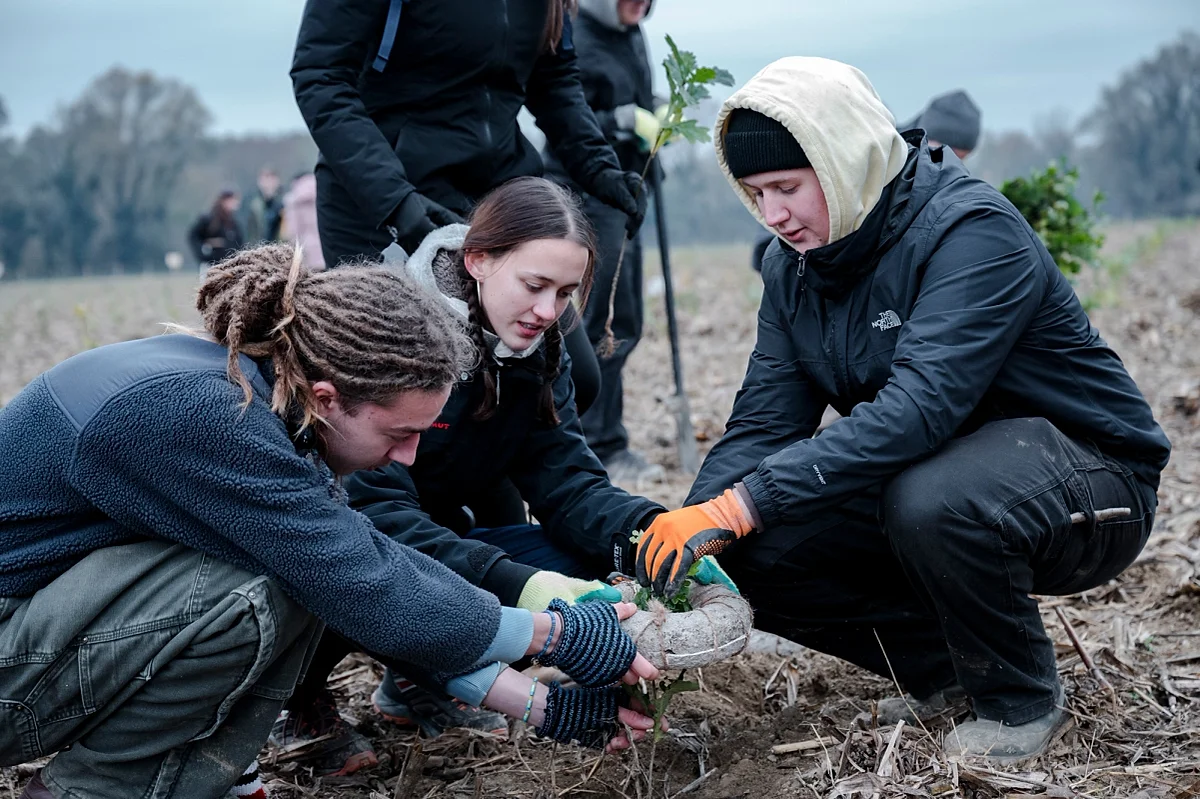
The product concept emerged during a five-day, forest-themed intensive design week within the Design Solfège course. Seven first-year BA students, with support from the MOME Zero team, produced and installed ten prototypes under two weeks in the MOME Forest in Vízvár, monitoring their performance over the following growing season.
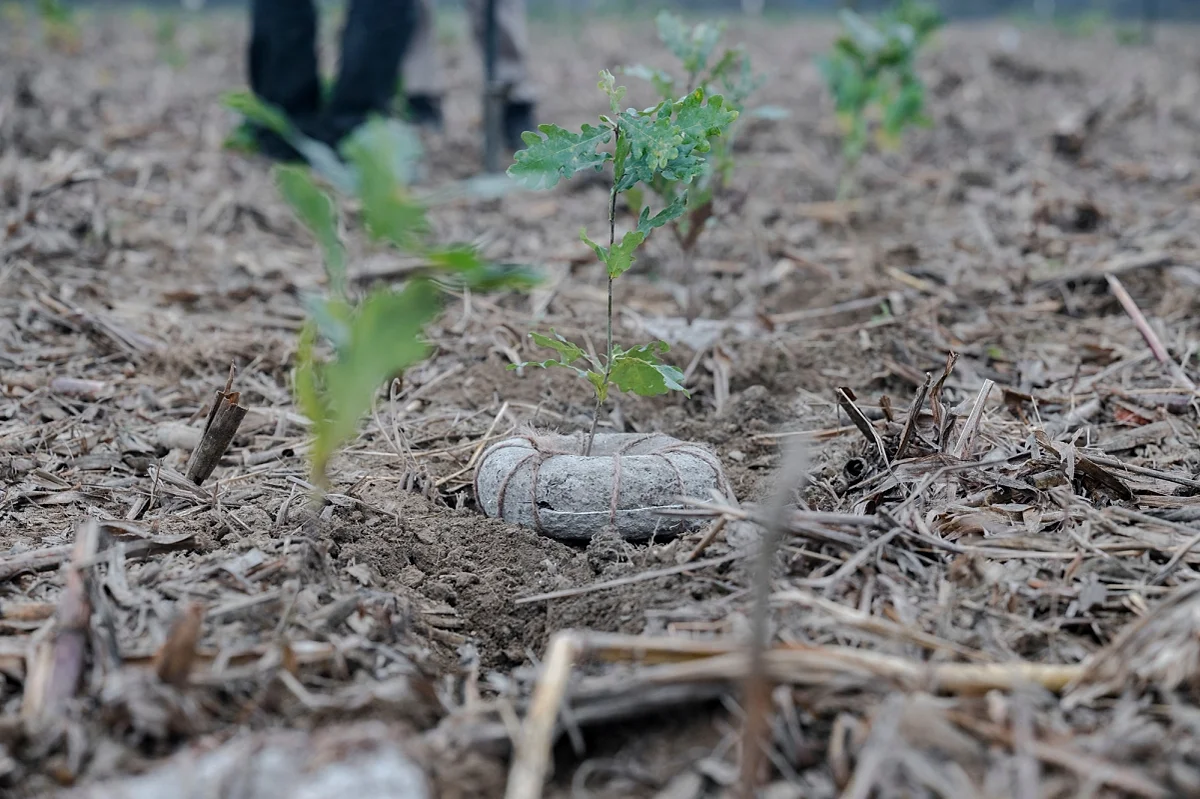
The Green Cradle is a ring containing mycorrhizal fungal filaments, cattle manure, topsoil, and a special wildflower seed mix. The herbaceous seed mix, tailored to the tree species and local flora, provides the required nutrients, supports and accelerates growth, and improves drought resistance, preventing invasive weeds from taking hold. The prototype uses only biodegradable materials that do not harm the environment, making it suitable for use in nature reserves and supporting the development of more resilient, climate-adapted forest stands.
List of students: Hajnalka Bakai (Designer Maker), Marcell Maxim Eigner (Textile Design), Domonkos Horváth (Design), Izabel Horváth (Textile Design), Panna Jójárt (Design Culture), Fanni Alexandra Kozma (Designer Maker), and Orsolya Simon-Pál (Design)
Design Solfège mentor: Dénes Sátor
Development support on behalf of the MOME Zero team: Dániel Barcza, Éva Tornyánszki, and Szilvia Weisz
Ugrás a jövőbe 2025 – A víz erejével!
Each year, the Moholy-Nagy University of Art and Design’s Jump into the Future competition sets a new theme for students in Years 7–10, inviting them to share their visions through exhibitions and presentations. In 2025, the central theme was water, essential not only to the functioning of the planet’s ecosystems but also to the survival of human civilisation. At the same time, the future brings serious challenges: water scarcity, the lack of access to clean drinking water, and the effects of climate change all demand urgent solutions.
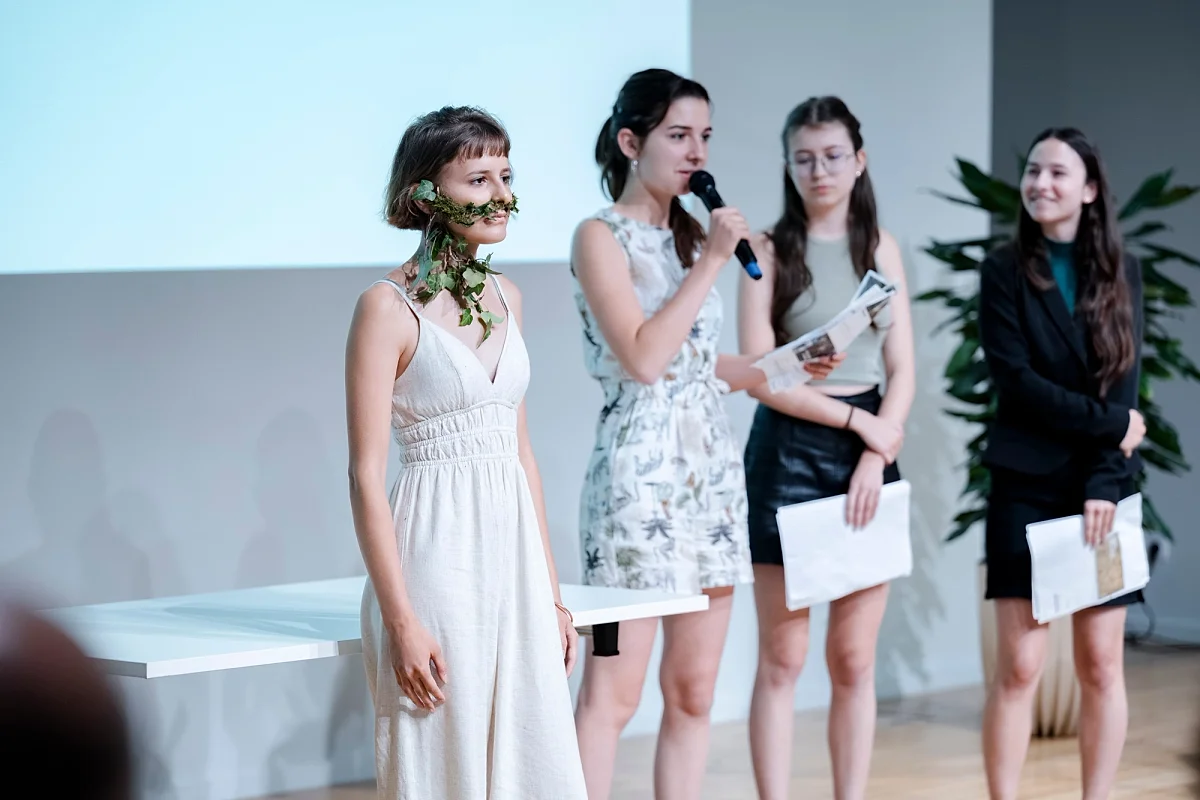
Two members of the Sustainability Office mentored one of the ten teams that reached the second round, supporting them through to the final. The Ísbíltúr team developed the concept and prototype of a survival device called Sym-breath, which is based on a direct symbiosis between humans and plant life, and addresses critical future challenges, including water scarcity and air pollution.
The product uses a specialised seed mix: once ingested, the human body becomes a host for growing a hybrid living plant facial mask that acts as a natural filter, allowing breathing even in polluted environments. The plant feeds on carbon dioxide exhaled by the wearer and moisture released through the skin, producing clean oxygen in return. Comfortable to wear without restricting speech, cooling, and lightly scented, Sym-breath moves beyond technological solutions, demonstrating the truth that humans do not control nature but exist as an integral, dependent part of it.
The Ísbíltúr team’s concept won the jury’s main prize.
Mentoring support on behalf of the MOME Zero team: Éva Tornyánszki and Szilvia Weisz
Business to Design 2026
Business to Design (B2D) is a unique educational module in the region, providing design BA students with up-to-date, practical knowledge of business development. The three-semester, practice-based course is designed to make starting a business feel achievable and give students the confidence to pursue it. In the final semester of the course, students develop their own project ideas in small, mixed-programme groups with mentoring.
In the B2D Course 3 of the 2025/2026 academic year, the Sustainability Office provided intensive mentoring to two teams: Green Cradle and MOME Briquette.
The Green Cradle project supports the survival of newly planted saplings, reducing maintenance needs and costs during the first five years critical for survival. The product is designed to create more viable, climate-resilient forest stands while reducing maintenance needs and associated costs.
The MOME Briquette initiative turns wood shavings and other by-products from the TechPark wood workshop into a usable fuel source. The briquettes are intended to be donated to families in need for charitable purposes.
Teachers of the B2D course: Máté Barna, Máté Gorka-Focht, Andrea Schmidt, Júlia Vesmás
Support on behalf of the MOME Zero team: Szilvia Weisz